Thursday, February 26, 2009

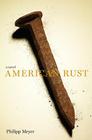
American Rust--Philipp Meyer

In lieu of a traditional review of Philipp Meyer's American Rust, and with thanks to Suey of the Weekly Geeks team for the suggestion, today I'll be "interviewing" one of the book's protagonists.

Set in a part of Pennsylvania that's devastated by the demise of local steel mills, American Rust follows multiple protagonists through a murder and its aftermath. With so many points of view, it was hard to choose who to interview--I was drawn to each of them, thanks to Meyer's spot-on characterization and stream-of-consciousness writing style. But I had a particular soft spot for a troubled young man named Billy Poe.

Ali: Billy, let's stick to talking about the beginning of the book, because I don't want to run the risk of giving anything away to people who haven't read it yet. Meyer kept me guessing until the very last pages.

Billy: Yeah me too. Christ I never knew if Chief Harris had it in for me or what, and then Isaac, half the time I didn't know where he was. Didn't know where I was myself half the time.

Ali: You were certainly unpredictable! In fact, one of the things I liked most was reading your thought process as you grappled with some tough decisions and situations. You changed the plan, sometimes, from one sentence to the next.

Speaking of decisions, let's talk about Isaac. Your loyalty to him molded everything you did in the book, didn't it?

Billy: Loyalty, you could call it loyalty I guess. Isaac's a good man, better man than me. Not as strong maybe but tougher in a way. Smarter. Should have been gone from this town ages ago. Me too but that's different, that was me freezing up, everyone telling me to go to Colgate not giving me time to think it through. Isaac stuck around to take care of his old man--you know his old man was crippled, right?

Ali: Yeah, I read the book.

Billy: Oh, right, forgot that's all in the book. Don't read much myself. Leave that to you smart folks. Writers, teachers, book bloggers, reading all the time. Reading through day and night, through the cold of winter and the heat of summer when the light reflects on the creek, the sun shining through the leaves and their nose is in a book. Think I'll take a walk, come to think of it. Get out in nature, get some exercise, clear my head. No, stay here and do this interview thing, that's good for you too. Make you think about things different maybe. There'll be time for a walk later.

Ali: Glad we got that settled. So, I'm thinking that your loyalty to Isaac, and his sister Lee's lack of loyalty to you, are connected. Do you think so?

Billy: Me and Lee were never serious. Just fun and games. She didn't owe me a thing. Could have told me when she got married, though. Could have at least told me that. Not that it'd make a difference but it would have been better to hear it from her.

Ali: Yeah, sorry about that, but I guess she was trying to move on--which is another big theme in the book, right? Every character is trying to escape in one way or another--sometimes with disastrous consequences. Do you think Philipp Meyer was trying to show how Americans have gotten locked into a self-destructive way of life?

Billy: I think we all just kept screwing up.

Ali: I guess that's one way of looking at it.

Billy: Maybe you should have interviewed Isaac, he's the smart one.

Ali: No, Billy, you did just fine. Would you like to choose a song to go with this book?

Billy: Anything but Faith Hill I hate that new country shit. How about some Springsteen? My Hometown.

Ali: Perfect. My Hometown it is.


American Rust is also reviewed by Wordlily.

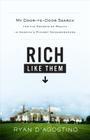
Rich Like Them--Ryan D'Agostino (Book review and giveaway)

What it isn't:
  • A self-help book
  • A "secret" formula for you to follow to get rich quick
  • A financial planning book
What it is:
  • A book of stories about people who happen to be very well off
  • Full of words to live by, whether you care about money or not
  • Inspiring
What I'll remember:
  • Harvey Jason, a rare book-seller: He talked about gratitude and the role it played in his success. He saw his own good fortune as a by-product of his relationships, both professional and personal, with other people. Nurture those, he said, and good things will come.
  • By the time I completed my journey, it had been drilled into my head that if extreme wealth is your only goal, you will probably never become extremely wealthy. Milking a job you love for all it's worth, however--now you're getting somewhere.
How to get your copy:
  • Leave a comment telling about a person whose life philosophy or success (doesn't have to be financial success) you admire. Preferably a real person who you actually know (I mean, any of us could say Ghandi, or Jesus, or Siddhārtha Gautama, but once somebody says that, how do you follow it with your great-uncle Bruce?).
  • Entries accepted until March 8th.
  • Hachette will deliver books to street addresses in the U.S. and Canada only.
  • Make sure to include your email address or an easy way to contact you!

Monday, February 23, 2009

Short Story Mondays: Everything In This Country Must, by Colum McCann

Source: Everything in This Country Must, a novella and two stories (Colum McCann, 2004)
Date read: 2006? Reread 2/19/09 (#4)
Briefly: In Northern Ireland, English soldiers save a farmer's drowning horse
First Sentence: A summer flood came and our draft horse got caught in the river.

Afterthoughts: This is a library book. I read it two years ago and it has sat next to my bedside table through renewal after renewal. I could not return it. If it went back to the library, I'd forget I'd read it, and I couldn't bear to think of that. (This is why I started writing book reviews).

The story is told from the point of view of the farmer's daughter, a mentally simple fifteen-year-old. An amazing voice. Heartbreaking and so real that you want to take the girl home with you. There's very little dialogue, but it would make no sense with more: these people don't talk to each other. If they did, it would be a different story.

On my first reading, I'd been immersed in Northern Irish literature and history, so the setting and all its undertones were already engrained in my mind. This time, it took a page or two to recover the context--and that context is crucial. The farmer's reaction to the soldiers is so poignant--his anger is palpable. He'd rather see his favorite horse dead than to accept their help. This might seem insane, or at least confusing, without an understanding of the meaning of the English soldiers. But it's Northern Ireland that's gone mad in the story, not the farmer.

Notable quotes: The collection takes its title from this passage, in which the soldiers (Stevie and Hayknife) are in the river trying to free the horse's stuck hoof: Stevie took four big gulps of air and Hayknife was pulling on the halter rope and the draft horse was screaming like I never heard a horse before or after. Father was quiet and I wanted to be back in the barn alone waiting for drips on my tongue. I was wearing Stevie's jacket but I was shivering and wet and cold and scared because Stevie and the draft horse were going to die since everything in this country must.

Sunday, February 22, 2009

Sunday Salon: back in the swing of things

The Sunday Salon.com In the interest of getting back into a posting schedule, it's a Sunday Salon post. I don't have much to say, though, so this'll be interesting. Or, not, as the case may be.

American RustRight now I'm reading American Rust, by Philipp Meyer. Yes, still. With houseguests last week, I did much more knitting (and learned to crochet!) and talking, than reading or writing. I'm hoping to finish this one in time to interview one of the characters for this week's Weekly Geeks assignment and to celebrate the book's release on Tuesday. The characters have such distinctive voices, and it's been fun to think about potential interview questions as I read along.


Shop Indie BookstoresI'm also reading Rich Like Them, by Ryan d'Agostino. The author wanted to find out the secrets of America's upper class, so he went through ritzy neighborhoods knocking on doors until he found people who would talk to him about the secrets of their successes. I love books like this. Would I ever have the guts to knock on people's doors like that? No way. But, this guy did, so I get to read about it. It'd be better with pictures, but d'Agostino does a good job of describing the homes in all their glory.

If this book intrigues you, here's a heads up: I'll be holding a drawing for a free copy, so check back next week for details on that!

As for David Copperfield...There it sits, sadly neglected, under a pile of mismatched socks, surrounded by a drumming DVD and mandolin chords book, a camera bag, a green water snake won at the nickel arcade last week, and folded kitchen towels. I will fold the socks, yes, and I will put away the towels and yes I will read David Copperfield this week. I will.

Friday, February 20, 2009

A Journey Into Dorothy Parker's New York--Kevin Fitzpatrick (Book review)

Dorothy Parker (1893-1967) was a theater critic who also published short stories and poetry during her New York years (she later moved to California and became a screenwriter), and was a founding member of the famous Algonquin Round Table, a group of writers and critics who, for ten years, had a standing lunch date at the Algonquin Hotel. She was also quite the partier. She's credited with quite a few pithy remarks, such as:

Men seldom make passes
At girls who wear glasses.

This is not a novel to be tossed aside lightly. It should be thrown with great force, and,

If you want to know what God thinks of money, just look at the people he gave it to.

But this isn't just a book about Dorothy Parker and her writing. It's also about the history and architecture, the politics and social history of the early- to mid-twentieth century New York City in which Parker lived and wrote. Scattered with photos, maps, and the occasional excerpt from Parker's work, this is a very readable slice of history.

It's a book about the growth of Manhattan in the early twentieth century, the beginnings of Broadway theater, the anti-communism crusade of the 1950s and its effects on American culture (Parker and others in the Hollywood scene were blacklisted during the McCarthy era). One sidebar relates how the Titanic disaster affected Dorothy's extended family when she was eighteen.

Added bonus for theater lovers: a nice twelve-paged section in the middle that details the history of various theaters, their dates, and the famous shows and events that were performed in them.

Occasionally, the connections between events and Parker's life are a bit of a stretch. A large picture of Marilyn Monroe and Arthur Miller graces one page, on which Fitzpatrick mentions that Parker met the couple at an event where she and Miller both received awards. On the other hand, Lillian Hellman, executrix of Parker's estate upon her death, is never pictured and is mentioned so casually that it's somewhat of a surprise to learn, in the final pages of the book, that she was "one of the few people [Dorothy] trusted" in her later years. It's as if text was written to match the available pictures, rather than the other way around.

Author Kevin Fitzpatrick is president of the Dorothy Parker Society of New York. On their site you can listen to Parker reading some of her poems.

The soundtrack: Rhapsody in Blue, composed by George Gershwin in 1924, during the peak of the Algonquin Round Table years.

Thursday, February 19, 2009

Copperfield Update; Character Names

Good gracious, it's been a week since my last post! I'd better write something or you'll all forget who I am. I had barely caught up after being on vacation, when my sister and nephews arrived for a wonderful week's visit. She lives across the country from me, so we don't get to hang out as much as we'd like. I wish she'd move to Oregon.

Tonight I'm going to attempt to combine a Weekly Geeks assignment and a reading update on David Copperfield.

Care challenged me to read 30-50 pages last week, and I did read 50. This week I've read about three. The exciting thing is that Uriah Heap has appeared! Uriah Heap is a characters whose name I've heard practically all my life, and I never knew who he was. I still don't really know who he is--he's supposed to be a bad guy, but he seems kind of okay so far. Unusual, for Dickens--usually the bad guys are pretty transparently despicable. And, with a name like Uriah...

Character names are this week's Weekly Geeks topic, so I'm going to write a bit about the names in David Copperfield. First of all, the book is fiction but autobiographical in many ways, and many people have thought that Dickens purposefully reversed his initials to create David's. According to the introduction of the edition I'm reading, Dickens was surprised when this was pointed out to him. In fact, the main character's name was originally Thomas Mag. Both David and Thomas were fairly common names in the mid-twentieth century when Dickens was writing this novel, so maybe he was going for a John Doe type of name.

But what about Uriah? I don't think Dickens was aiming for a name that meant "God is my light." Maybe he was looking for a generally unpopular name: Uriah's never been in the top 1000 names, even in the nineteenth century.

Two of the maternal figures in the story--David's mother, and his nurse (Pegotty) are named Clara. In this case, I'm sure Dickens was going for the meaning of the name: bright and clear. Nothing was more clear to poor David than the love his mother and nurse held for him, even when circumstances prevented them from fully expressing it.

That's all the names I have time for, and as far as a favorite character name in a book, I really don't have any that I can think of. The other thing about names I want to say is that, like Mr. Dickens, I've changed several character names in my book--some, more than once! I started off wanting very common names for all my characters but I realized it was too confusing, plus I had too many J and B names. So, John became Sean; Jim became Ian; Jerry became Arnie; Bill became Nate; Ben (named long before my son was born) became Ken but he's going to be something different, I'm considering Kip for him. When I talk to my husband about the plot sometimes he's mystified because I've changed the names since he last read it. I wonder if any other famous characters, besides David Copperfield, were first conceived of with different names.

Thursday, February 12, 2009

Hidden Hawaii--Ray Riegert (Book Review)

One thing I love about reading: it lets my mind travel to places I'll probably never see. After Graham Salisbury's Night of the Howling Dogs took my kids and me to Hawaii (a rough trip, what with the tsunami and all), I was glad to continue that mental journey with a review copy of Hidden Hawaii from the Ulysses Press via Mini Book Expo.

Hidden Hawaii is a treasure trove of information about the geography and history of the fiftieth U.S. state. Did you know the hula dance was outlawed by Christian missionaries? It was brought back by King David Kalakaua at his coronation in 1883. "Hula is the language of the heart," he said, "And therefore the heartbeat of the Hawaiian people." The story of the Hawaiian people over the last two hundred years is both tragic and inspiring, and award-winning travel writer Ray Riegert offers just enough to whet my appetite.

The author lives in California, but the sections on each of the islands read like letters from a local, offering tips as you plan your trip. Check out this description of the mule ride to the historic Kalaupapa Leper Colony (people still live there!):

You saddle up near the Kalaupapa Lookout and descend a 1700-foot precipice, among the tallest sea cliffs in the world. Kalaupapa unfolds below you as you switchback through lush vegetation on a three-mile long trail. The ride? Exhilarating, frightening, but safe. And the views are awesome.

The selling point of the Hidden Travel books is that they clue readers in to the less touristy places, so I was expecting to learn which beaches, parks, and dining establishments are enjoyed by the locals, and I did. I was surprised to find locally used lodgings listed as well:

For a funky country place high in the mountains overlooking the Kona Coast, check in here. Catering primarily to workers, this 11-unit hotel remains a real sleeper. It might be difficult to book a room during the week, but on weekends, the lunchpail crowd heads home and you can rent a small place at an unbelievably low rate.

Now that's my kind of book.

This is the fourteenth edition, published in 2008—I think we definitely need a homeschool field trip to Hawaii before the next edition comes out, don't you? We could call it a unit study. Read some more Graham Salisbury books...study Pearl Harbor and volcanoes...

Your turn to test out this book: Ask me anything about Hawaii, anything at all, and I'll see if the answer is in there. Come on, see if you can stump me!

Tuesday, February 10, 2009

Pen Pals: Ann Patchett and Elizabeth Gilbert


The story goes that Ann Patchett and Elizabeth Gilbert sat on an author panel together one day, and liked each other but had no time to talk, so they exchanged addresses. Not email addresses, but the kind on your house that the mailman uses to bring you bills and credit card offers. Unlike I'd probably do, they both actually followed through and wrote to each other, and hence a pen pal relationship began.

Ann and Elizabeth met in person for the second time this week, when they came to Portland to give a lecture together. Among other things, they spoke of the uncanny things they have in common:
  • Each achieved her big success with her fourth book
  • Each had a terrible first marriage followed by a wonderful second marriage to a man 16 1/2 years older than her
  • Each gladly remains childless
  • Each dotes upon an obese pet (can't remember which has a cat and which has a dog)
  • Each is responsible for nurturing several other people
  • They're both fond of Henry James and nineteenth-century authors such as Dickens.
A few nuggets I wrote down:

Both Patchett and Gilbert find nonfiction much easier to write than fiction, but while Patchett feels compelled to continue writing fiction, Gilbert would be satisfied never to write another novel.

The book Gilbert is most proud of is her collection of short stories, Pilgrims. (Patchett didn't answer this question). She wrote the stories in college and the years shortly afterwards, and the collection was published when she was 26. Looks like great fodder for the 100 Shots of Short challenge, to me.

Ann Patchett doesn't believe in writer's block. She says, there is a time to write, and a time to not write. Just as you don't plant corn one day and eat it the next, ideas need to percolate. What some people call writer's block, she would call taking the time to let the seeds grow. (This was my favorite gem of the whole night)

And, when asked about men reading books written by women, Elizabeth Gilbert told a funny story about a reader who wrote to her after having picked up Eat, Pray, Love off his girlfriend's bedside table. He got hooked in, but was embarrassed to be reading it in public so he hid the book inside an issue of Maxim on the bus (or maybe the subway). But he was so moved by one section that he began to weep. On the subway. While reading what, to all the world, appeared to be the contents of Maxim. That's when he decided it might be better to let the cover of Eat, Pray, Love be known to the world.

It was a very fun chat to listen in on--and I love the image they shared of the two of them perusing the aisles of Powell's together this afternoon before their talk, pulling books off the shelves for each other to read. Thanks to the power of snail mail pen pals--the chemistry between these two was delightful.

Monday, February 9, 2009

American-born Chinese--Gene Luen Yang (book review)

Graphic novelist Gene Yang describes his book American Born Chinese as three stories in one: a realistic portrayal of a Chinese American boy growing up in a predominantly white suburb, a series of stories based on a Chinese Monkey King legend, and "a sit-com starring everybody's favorite racial stereotype, Cousin Chin-Kee." The three stories blend together and play off each other to make one of the funniest and most meaningful graphic novels I've read.

I didn't expect to like the Monkey King sequences as much--generally I go for the realism--but Yang is one of those geniuses when it comes to facial expressions and body language, and the Monkey King himself is, dare I say it? Adorable. Here he is, in all his glory, in the days before his confidence is crushed when he tries to fit in with the other deities.

The way the Monkey King story ties into the Chin-Kee story at the end was a total surprise to me. I loved it.

My older son read this as well, and the Monkey King sections were his favorite part. He thought the walking stereotype Chin-Kee was "just weird,"--at 12, he understands stereotyping but hadn't been exposed to this one enough to appreciate its portrayal in the novel. And, as a young white boy, I think a lot of the nuances of Chin-Kee's American cousin Danny's story went over his head as well.

In addition to a comic artist, Yang is a high school teacher and a dad, and his connection to kids and teens is easy to see. His website is Humble Comics. I'll definitely be seeking out more of his work.

The Soundtrack: I almost gave up, after an hour and a half last night searching for the music I wanted, with nothing to show for it but an annoyed husband. Do you know how hard it is to find a Chinese American musician on Playlist.com, who isn't (a) a rapper whose lyrics offend me (there were more than one of those to choose from, and I'm not quick to be offended). (b) an R&B singer who I can't bear to listen to for a full song (it's not his fault: even eclectic taste has its boundaries). (c) a female singer (not the right voice for this book) (d) Yo-Yo Ma--though I found a gorgeous version of Gabriel's Oboe by him, it's also not the right "voice" for this book.

What I finally found is perfect, and it's worth it to see this young Chinese American man rocking out with his erhu. Jack Hsu wanted to play progressive instrumental rock with the traditional Chinese instrument, so he formed his own band, Hsu-nami. Way to embrace your heritage, Jack. You're an inspiration.

American Born Chinese is also reviewed by Nymeth.

Sunday, February 8, 2009

The Graveyard Book--Neil Gaiman (Book Review)

I'd never read anything by Neil Gaiman before, and I'm not big into ghosts and the like, but everyone kept raving about The Graveyard Book (and they continue to, now that it's won the Newberry Award). Since my boys enjoy ghosts and scary things more than I do, I decided to share it with them as a read-aloud.

I'd heard Gaiman was funny, so when I started on page one and there was a man holding a knife walking through a house, I used a sort of tongue-in-cheek tone, ready for the punchline. I assumed we were supposed to think it was scary, and then we'd find out he'd been carving chicken or something.

When I realized that, no, Gaiman was actually beginning his childrens' book with a cold-hearted killer searching a house to kill a baby after having murdered two parents and a little girl, I was taken aback. And the kids? "It started out more creepy than I thought it would." (Evan, 8). "It wasn't what I expected." (Ben, 12)

Though the tone is more grisly, the initial premise is remarkably similar to Harry Potter and the Sorcerer's Stone: both books begin with a baby's parents murdered by an evil man, the baby brought to strangers for protection from the killer. But my boys found The Graveyard Book's first chapter tedious. Meanwhile, Gaiman's constant referral to the killer as "the man Jack," drove Evan nuts.

"I'm sure the author's doing it for a reason," I told him. "Maybe he's trying to show that Jack isn't a character we should expect to get to know."

"I don't care the reason. We get that he's a man! Can you please, please, just call him Jack from now on?"

I dropped "the man," from every reference to Jack, and read on. The baby became a small boy named Nobody, Bod for short. This nickname gave me more read-aloud trouble. I do a fairly decent assortment of English accents, but I'm not perfect. I had pronounced the name the American way: "No-buddy." When Gaiman introduced the nickname Bod, I was stymied. Bod? Seriously? Rhymes with cod? Because when I think "bod," I think this: But maybe that's just me.

In any case, I chose to pronounce it "Bud," because that made sense with my previous "No-buddy" pronunciation and because it sounds like a nickname to me, rather than a gossip magazine term. Only, much later, a character misheard his name as Bob, so obviously I'd gotten it wrong.

But my kids didn't mind about the name. They just wanted to know when the action was going to start, and when Bod/Bud was going to get older than five, and what was the point of all this? Interestingly, Gaiman says he started writing the book at Chapter 4 and filled in the first three chapters later. For my kids, the book began at Chapter 3, when Bod was at an age they could relate to. And yet, they complained that once his Chapter 3 adventure was over, it had no effect on the rest of the plot (until the very end, but they didn't know that part when they were complaining). Ben said, "It's like a short story in the middle of the book, and then it's over and you move on to the next thing."

Ben's constant refrain every time I picked up the book, was, "I'm having a hard time getting into the story." Evan didn't complain as much, and he's quite vocal when he's not enjoying something, so I think he liked it more but didn't want to argue about it. From him, I heard a lot of, "I don't get its," usually followed by questions about character motivation. Why did Bod want to go to school? Why didn't the ghosts just tell Bod about the Danse Macabre? Why did Liza stop talking to him? and so on.

Overall evaluations?
Evan: I didn't really get the point of it.
Ben: By the time I started almost getting interested, it was about done. The battle scene at the end was pretty good. Except it wasn't really a battle scene, more like a chase scene.
And me: Neil Gaiman writes beautifully, and the characters were well-drawn. I didn't love the story, but I understand why people do. But the people who raved about it--those I read, anyway--are all adults. My question is, who's its audience, really?

You can listen to Gaiman read The Graveyard Book on his website. Portlanders may be interested to know that the animation for the movie that just came out of his book Coraline was done right here by Laika Entertainment.

Saturday, February 7, 2009

One Day I'll Post a Book Review....

...but in the meantime, here's a brief interview that Alea of Pop Culture Junkie was kind enough to do with me:

1 What is your favorite time period to read about?

Top favorite: Right this very minute!
Least favorite (not that you asked): Call me resentful but the retrospective Sixties Baby Boomer coming-of-age stuff, makes my skin crawl.
Also, it takes a very special book for me to enjoy a futuristic setting.

2 Is there an author you have no interest in reading?
Stephen King (Loved On Writing, but his fiction is not for me. I tried.) And most authors who hit the Bestseller list every year or two, with a new book each time.

3 Do you listen to books on cd?
Occasionally on car trips, but my mind wanders and I miss stuff.

4 Do you keep many of your books after you read them? If not, what do
you do with them?

Most of them I return to the library. I love to loan my ARCs to friends and have them pass them on to friends, and so on. I'd like to do Book Crossing but haven't gotten it together yet.

5 What's the worst damage you have done to a book? How did it happen?
We bought a new Better Homes and Gardens Cookbook because we used the old one so much it was falling apart. Not long after we bought it, I spilled something on it and didn't realize it until I found the entire Index stuck together in one thick clump of pages. We still use the cookbook, though.

I also have some award/meme catch-up to do.

Jessi of Casual Dread gave me the Premios Dardo Award, which acknowledges the values that every blogger shows in his or her effort to transmit cultural, ethical, literary, and personal values every day. I'm supposed to pass this award along to 15 people, which I think is a great idea in this particular case. At first I thought I could choose the other people besides Jessi who are participating in my Diversity Rocks challenge, but alas (ha!) there are more than 15 of them! I can't pick some and not others, so I'm going to let it rest here.

And lastly, Rebecca of Lost in Books tagged me ages ago for a happiness meme. Six things that make me happy:

1. Sleeping in my own bed, with my own squishy pillow, after a trip.
2. My sister, who's coming to see me Friday!!!!
3. When something I wrote makes somebody laugh.
4. Watching my boys find their own music to love. Who knew a band like Linkin Park would bring me such joy, indirectly?
5. Deciding to take a family trip in the unlikely month of February, and being treated to unexpected sunny warm weather.
6. Helping people connect with each other--basically, what I've been working at these past few days when I was giving presentations to homeschoolers and potential homeschoolers, instead of writing book reviews.

Friday, February 6, 2009

Knitting progress

I've been participating in the Dewey Knit-a-long challenge this month, and it's about time I posted a progress report on that here.

I introduced the felted booga bag I'm working on here, but I'm obviously using different colors and a slightly different pattern. The yarn is an old Ecuadorian sweater I unraveled when it started falling apart a few years ago--and here is the bag so far:


Being on the road, I've been appreciating the fact that I have a project to work on--I can knit on roads too curvy to read by! But now I must go read Ranger's Apprentice to my sleepy boys. Good night!

Thursday, February 5, 2009

Traveling Thursday

I didn't have a chance to post a Sunday Salon post this week, and I've been on the road ever since, which leaves me with not enough concentration to post an actual book review, so I've decided to post a sort of salon-ish post here in my motel room.

Our dear David Copperfield wasn't invited to come along to southern Oregon because, frankly, he is too fat. I wanted paperbacks that could be tucked easily into a backpack along with my writing folder and my knitting.

So, here's what I brought along:


At our rented beach cottage, I read Kevin Fitzpatrick's A Journey Into Dorothy Parker's New York. This is one of several of the ArtPlace series by Roaring Forties Press I'll be reviewing in the months to come, and I can't wait to get my thoughts together and tell you all about it--both good and bad. I learned so much from this book! Which wasn't hard to accomplish, since I knew very little about Dorothy Parker to begin with--but I also learned about a lot of other people and places I hadn't expected.

Once I'd finished Dorothy Parker, I moved on to Something Like Beautiful, by Asha Bandele. The first few chapters were kind of frustrating for me, because Asha tends to repeat herself. A lot. She repeats herself quite a bit, in fact, (Get it? Like that.) writing in circles around ideas or events to the point where an entire paragraph or two seem to be devoted to a single thought. On page 72 I put it down to go to bed, and at our hotel between the coast and southern Oregon the next night when I went to pick it back up . . . I didn't.

Instead, I picked up Philipp Meyer's debut novel, American Rust. I'm on page 40 right now, and I'm definitely into it. It's not a quick read--a little Faulkner-esque, in its third person stream-of-consciousness style. Meyer switches points of view in each chapter and I'm loving the way the third-person narrative voice changes with each new point-of-view character. Lots of early action, too, for those who like a good dose of plot with their cool narrative effects.

And here's what the whole family is reading together on our trip:

Both of these have been great family reads, in that they're entertaining to all of us. On the curvy roads we're listening to an mp3 of Pictures of Hollis Woods, that I downloaded from the library--my first time doing this successfully. The story of a girl who has bounced from foster home to foster home. We're about a third of the way through it. When we're not in the car, and during the straight parts of the drive, I'm reading the first Ranger's Apprentice book aloud. It's great! I hope they'll want to read the rest of the series with me--even though it's impossible to do the voices the same way Ben heard them in his head when he was reading Book 1 to himself!

The books, the weather, the people who've attended the presentations I'm here to give, and the people I get to hang out with every day (who've been keeping the bickering in the car to a bare minimum) have all conspired to make for some lovely time away from home. And now, my blogging hour is done--time to get back to my book and help the kiddos settle down for the night.

Monday, February 2, 2009

Short Story Mondays: The Clicker at Tips, by Ron Carlson

Source: At The Jim Bridger (2003) by Ron Carlson
Date Read: January 30, 2009 (#3)
Briefly: Matt meets his old friend/old flame Eve, for drinks at a bar called Tips.
Afterthoughts: Two words: Ron Carlson!

You want more than that? Okay. But first: Ron Carlson is so much my all-time favorite writer of short stories, that my very first Worducopia post was about him. So much, in fact, that I've had At The Jim Bridger sitting on my bedside table for months without reading it, because knowing there are Ron Carlson stories I haven't read yet is like having a full bowl of ripe strawberries waiting to be eaten.

But, for the sake of Short Story Mondays, I've eaten the next strawberry (and the next, and the next, because it's impossible to stop at one) and I'm ready to share the bowl with you. And, just like describing the taste of a fresh, in-season Oregon berry to anyone who's never tasted one (are you tired of the metaphor yet? I'll stop), I'll have a hard time explaining what was so great about it. But I'll try.

Except I can't tell you what happens because (a) part of the pleasure of watching the story unfold is figuring out who and what and why for yourself, and I don't want to ruin it for you, and (b) not all that much happens. Stuff happening is not the point. The point, as in many of Carlson's stories, is the relationships between people and how every action and word reflects that relationship and makes it real to the reader. Carlson is the master of distilling a world view down to one moment; a moment down to one motion of the head or the rearranging of glasses on the bartop.

In The Clicker at Tips the reader is an invisible third person at the bar, feeling the tension between this man and woman like an oncoming thunderstorm, without knowing any of the history behind it. Matt, the narrator, fills us in as the evening proceeds. The ending is unexpected but perfect. Go ahead, get yourself some Carlson for your bedside table, and let me know what you think.

Notable Quote: In the corner [of the bar] near us the group of young regulars had circled their chairs around two of the little tables and were making noises about Chicago this, Arizona that, even though it was going to be a one-sided exhibition. There were five or six guys. They leaned back in their chairs and pointed at the screen from time to time, yucking it up. They got to me for all the wrong reasons. I didn't envy them so much as I wanted to correct them, ask them to display some real comaraderie, some real something the way I had with my friends Eve and David and Christopher and Jeff and Deborah, now Debbie, my wife. We had met in magical ways and hung out in the real places like a kind of family over an evening of drinks and appetizers, plate after plate, and we had talked wickedly, tenderly, and we all knew that those hours once a week were our real lives, the center. One thing led to another; there was a sense of things happening. I hated those young guys and their surface lives, a night with the football game. I hated the evening coming on this way, and my life, one good part of it, over.