Showing posts with label memoirs. Show all posts

Tuesday, June 11, 2013

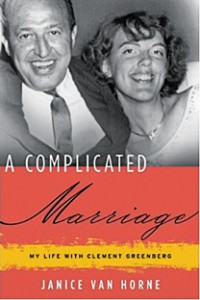
A Complicated Marriage--Janice Van Horne

What I'm Reading: Right now I'm reading A Complicated Marriage, by Janice Van Horne. When I accepted a copy of this book from TLC book tours, I wasn't thinking of it as a celebrity memoir, though the name Clement Greenburg was familiar to me. My husband got his Master's degree in Art History, and art critic Greenburg's name was tossed about in the types of conversations that Art History graduate students and professors have at parties.

The truth is, if I'd thought, "Celebrity memoir," I would never have read the book. I usually hate those. The name dropping! It drives me nuts. And the incessant chronological rundown of every detail of the person's life, as if, now that they're famous, their memories of drinking Tang  in the back yard and taking bike rides to the 7-11 as a kid are fascinating.

Luckily for me, A Complicated Marriage is different from the typical celebrity memoir, even though Van Horne spends plenty of time detailing the whirlwind of a social life that she and Clem led in the artsy world of Manhattan. Maybe it's because she is so humble, or maybe because she herself doesn't seem especially impressed with the likes of Jackson Pollock, but the name dropping doesn't bug me. And, Van Horne starts her narrative where the story starts (with herself meeting Clem) rather than droning on about her childhood. I'm loving the way she gives enough detail to offer readers a snapshot of a moment in time. Reading this book is like spending time browsing through old photos with friend or relative, listening to them recount stories of their life. I haven't gotten to the "complicated" part of the marriage yet--though it's foreshadowed, big time. I'm looking forward to seeing how it all unfolds.

Monday, April 29, 2013

Raising an Autistic Adult (Discussion of "Next Stop" by Glen Finland)

When I saw the book Next Stop, a mother's memoir about helping her 21-year-old autistic son navigate to more independence, I immediately thought of my friend Karen. Karen and I have been friends for 13 years, since we were pregnant with our youngest boys. At that time, her oldest son Marc was a highly sensitive 9-year-old, truly one of the sweetest and smartest kids I'd ever met. Marc was diagnosed with high-functioning autism as a pre-teen.

With April being Autism Awareness month, I decided to talk Karen into reading Next Stop with me. Then I realized how many people I know raising teens or young adults who are on the autism spectrum. I approached two of them, one brought a friend in, and soon a little discussion group was born. It turned out that we had a lot to say! (Translation: I cut as much as I could and this is still the longest blog post ever.) But the discussion is so full of wisdom and insight from these wonderful women, that it's well worth reading through to the end.

Meet the Moms: Karen, Jen, Maureen, and Mellissa

Karen's sons are ages 21, 18, 15, and 12. "After being a stay-at-home, homeschooling mom for 15 years, I put my kids and myself in school and got my master's degree. I'm now a high school counselor by day in a smallish rural high school. Since Marc (21, and previously diagnosed with autism) graduated from high school, we have been on a very bumpy road trying to help him transition to adulthood."

Jen has a boy aged 18, and two girls, 15 and 12. "I am a homeschooling mama as well as an educator by profession. We are entering our 11th year of homeschooling (for mental health and special needs). My eldest will be undergoing a full pysch. eval. this spring and we are pretty sure that he will show up on the autism spectrum this time around."

Mellissa has three sons 14, 11, and 8. "I've been home with the boys (who go to public school) for almost 12 years and am currently trying to figure out what I want to be when I grow up. Before I stayed home I was a biology research scientist. My younger two boys have been diagnosed as being on the autistic spectrum, but they are both very high functioning. The youngest definitely has more of an "Aspergers" feel."

Maureen says, "Mellissa posted about the book on our Facebook group’s page and it sounded really interesting. I read it in only a few days, which is super fast for me, but then again I am sort of an autism memoir junkie, if I may say that. I have a 14-year-old daughter with Autistic Spectrum Disorder and a neurotypical 17 year old son.

The Discussion

Ali: One thing that really struck me is the author's relationship with her other two kids and how she feels it suffered because of her hyper-focus on David. As a parent of two fairly typical boys, I know that I never feel like I have quite enough time for either of them (or my husband, or my writing, or really anything in my world come to think of it...). I wondered whether Glen Finland's sense of being pulled away from her other children is more true for parents whose children have special needs, or if it's just part and parcel of parenting and the difference lies in the mother putting the "blame" on the atypical child for taking her away from her other children.

Jen: The author's relationships with all of her kids and where she lays the "blame" really turned me off. I have been to hell and back with a couple of my kids and it never made me feel as negative about them as this woman feels about all of her kids. Certain types of special needs are more time consuming/worrying than others but as parents we learn how to strike some sort of system for a more balanced approach so that no one child feels overly neglected. Honestly, the attitude she expresses in the book makes me think that she resents that parenting (of any sort) got in the way of her living the high powered life that she seems to have wanted.

Ali: It seemed like she felt trapped in motherhood. She was so devastated by her 3rd pregnancy--she wasn't ready for that third child. I think that a lot of the book was her grieving for the life she felt she could have had.

Jen: I agree that having an unexpected 3rd child definitely had an impact but MANY mothers find themselves in that situation and get past that "trapped" feeling. I greatly admire and respect the author's openness and honesty about her feelings, good and bad, but the negative really seems to overwhelm the positive. Now, I have not had to deal with the severity of issues she does but it really seems like she focuses on what her son can't do and is surprised when he does do things on his own.

Ali: I think her negativity comes from fear. When she writes about David's failure to gain anything from the program in Florida, saying that the one positive aspect of it was that she got 2 years to reconnect with her husband--I see a lot of fear on her part, that *she* will never be free of David's autism.

Maureen: I am relating so much to Jen's reactions. I have to say, I was struck by the weird dichotomy between her focus on what David can't do and the fact that she lets him loose on the mean streets of DC. On the one hand, I feel like the kid is WAY more capable than she gives him credit for (he has a driver's license, for god's sake) yet she doesn't seem to believe in his abilities. Then why oh why does she give them that incredible amount of unsupervised, possibly dangerous freedom? This the crux of my overall reaction to the book; and I'm not an overly protective person (it may sound like I am!) I agree that she is refreshingly honest about her feelings, good and bad, but she does come off as super self-centered in that comment about reconnecting with her husband.
 
Jen: I think Alison hit the nail on the head when she said that the author is afraid that she will never be free of the responsibility of David's disability. Unfortunately it is a fear that she has exaggerated in her mind thereby causing herself and her family more stress than need be.

Karen: I have a hard time connecting with mothers who write books about how difficult it is to be a mother. Of course it's difficult. Obviously, if you have more than one child, your time has to be split among them and no one gets all of you. In Glen's case though, it seems that because she couldn't give all her time or attention to Max and Eric, she ended up giving nearly none of it. In the Love Me Tender section, Glen bemoans not being able to give enough of herself to the other boys, then she immediately jumps to the need to take time for herself and starts writing stories again. Not that I think taking time for yourself is a bad thing. I'm all for it. I'm just saying that if she really regretted not giving enough of herself to the other kids, she might have put that ahead of her writing.

Jen: Karen, I had that exact same thought in regards to her writing. She seems rather oblivious to how her own choices negatively, or positively, affect her family's emotional state. I am a firm believer in parents pursuing their own interests but there are always times that parents have to put their own interests/needs aside to make time for kids going through a hard time. I think this is particularly true for parents with special needs kids.


Ali: In the Q & A at the end, the first question is what is the book about, and the author replies that it's the story of the summer she took her son around on the Metro. This is what I had expected the book to be, since the cover blurb says the same, but IMO it wasn't any more the story of that event than it was the story of David running a marathon, or David getting a job at the ball park, or David getting a scooter. Was it the story of them riding the Metro together, in your mind? Was that project a key turning point in their relationship? Would the book be fundamentally different if they hadn't embarked on the Metro project?

Jen: That part confused me, too. I suspect that originally that summer is what the book was about but that the overall story grew and expanded once she really got writing. Personally, I found the organization of the story hard to follow as it seemed to jump around a lot.

Karen: The author makes a big deal about the Metro being David's beginning to have a "shot at a real life he can call his own." I'm not sure David really wanted to be on his own with nearly the same fervor that his parents wanted him to. That summer on the Metro, David relished the freedom of choosing where and when to ride and wander or run around D.C. But, where did he ever really express a desire to move out? I think his parents wanted him to want to have a life of his own, but it's not the same thing. Lots of neurotypical young adults live with their parents well into their mid twenties. I hope that my autistic son is able to function on his own one day, and I work to help him develop the skills so that he can. But, realistically, while other kids move out in their early twenties, I realize that Marc will likely be much closer to thirty before he is ready. He has been delayed in developing many other skills. Why should that be any different?

Jen: That's a really good point Karen. I do remember thinking something along those lines as I was reading. That these parents seem to have no clue what David wants and that most of what they emphasize is what *they* want or need.

Ali: I was struck by that when they took him to the group home. They asked him afterwards what he thought, and he said that he liked it--"Except for all the people." I would have reassured him, "That was an open house, so there were a lot of visitors. It wouldn't be so crowded if you lived there." Instead, their reaction was, "Yeah, he's right, it's totally the wrong place for him." I didn't feel like they were looking at it from his perspective at all.

Jen: I just have to say that, based on the last third of the book, Glen has some amazing sons that she should be very proud of. David proves to be more capable than she ever expected and the two other sons really step up to the plate when their brother needs them. That part of the book warmed my heart as not all siblings are willing, or able, to help support and care for their special needs family member.

Karen: I agree, Jen. I know the book was about David, but I would have liked to have gotten to know Max and Eric better. They obviously feel a deep sense of connection and responsibility for David, but we didn't get a sense at all of how that evolved in their family.

Ali: I would have loved to hear more about Eric and Max's perspectives on having David as a brother. I'm sure she wanted to protect their privacy by not exposing too much of their personal lives in the book. In the Afterword, she said that upon hearing of her plans to write the book, Eric cautioned her, "Don't embarrass him." I thought that was so sweet and showed so much empathy. It really touched me.

Karen, I'd be interested to hear any experiences or concerns that you've had with Marc that the book brought to mind. Marc is much more communicative and emotionally connected than David, though, so it kind of feels like comparing apples and oranges.

Karen: It's like Glen said several times about how if you've seen one autistic person, you've seen one autistic person, though there were some times where she was describing David that I had an ah-ha moment about Marc. Like when she talked about how David always lives in the present. One of my frustrations with Marc is how unconcerned he is about doing poorly in college. Failing college classes only upsets Marc when I call him out on it and force him to have a discussion about what is going on. Otherwise, he's perfectly content to ignore the unpleasantries and carry on as if he has no cares. Reading that part of the book gives me another way to look at those behaviors.

I had high hopes that the book would give me some ideas for helping Marc transition into adulthood. Like you pointed out, Marc and David are pretty different. I think Glen and I are pretty different too. While I would like Marc to show some concern and interest in his future, I don't feel the sense of urgency to get him living independently that Glen expresses in the book. For now, Ray and I have told Marc that he is welcome to live with us as long as he is in college or working. He makes dinner for the family one night a week and does some cleaning chores around the house. Maybe it's because he's my oldest, so I'm not feeling any empty nest urges, with three younger brothers still at home.

 One area where I think Glen and Bruce could do better for David is to help him explore his interests. I am confused by their need to push him into a menial job that he will likely hate. I don't know how much he gets for social security disability, but will a few hours a week at minimum wage really help? The volunteering with the animals was great. How about helping him find something to do with his maps or start a running club for boys at the local school? If Marc doesn't get serious about college, I am going to push him into getting a menial job; but that's because I want him to learn what is available in the working world to him without a degree. I think Marc is capable of getting a degree and having a career. David probably isn't.

Ali:  I think you're right that birth order is hugely important. When I was reading Glen's book, I found myself wondering how things would be different for David and his family if he had been her oldest instead of the "oops" #3 child. Or, alternatively, how they would be different for Marc if he were your 3rd or 4th.

Jen: Those are some great comments Karen. I think a lot of parents are rather limited in their views of what's available for their kids as job/career choices; special needs or not. I need to ponder that whole living in the moment concept as one of my kids is like that and it drives me bonkers.

Ali: It is so hard to let our growing-up kids make their own choices. I'm right on the verge of this phase of parenthood (my oldest is 16) and I have so much trepidation. I can only imagine how much stronger that would feel if I were concerned about his competence going into adulthood.

Jen: I agree Alison. Watching my eldest struggle to make his way in the adult world is one of the hardest things I've ever had to do.
________________________

And I think that's what Next Stop is truly about--the process of letting go. Letting go of preconceived expectations, and of control over our lives, and of people that we love.

Has autism affected your life? I'd love to hear your stories or reactions to our discussion in the comments.

Thursday, April 11, 2013

Coming up: Next Stop discussion

In honor of Autism Awareness month, I'm reading Glen Finland's memoir, Next Stop. The author writes of her desperate attempts to help her 21-year-old autistic son find his way in the world. This week I'll be discussing the book online with a group of friends (and a friend-of-a-friend). All of these women have direct experience with autistic young adults, and I can't wait to hear all that they have to say about this memoir.

We're having our discussion in a private Facebook group, and I will post the highlights once we've all had a chance to finish the book and complete our discussion. If you are reading the book or raising an autistic child and would like to join the discussion, email me at worducopia-at-gmail-dot-com and I would be glad to add you to the group. We'll be discussion it throughout the next week. Or, of course, you can also wait until I post the highlights of the discussion and add your two cents to the comments.

Thursday, March 28, 2013

Chief Complaint: Brain Tumor -- John Kerastas

Who knew a brain tumor could be funny?

Fortunately, John Kerastas's tumor isn't malignant, but it still sucks, of course. Chief Complaint: Brian tumor begins when 57-year-old Kerastas begins to suspect something is wrong with his vision, and continues through the first year after his diagnosis. Many worrisome things happen, but this is not a depressing book. His chronicle of this eventful year is full of self-deprecating humor. Okay, occasionally it gets a little too punch-liney for my tastes. Kerastas is that kind uncle who makes too many jokes to put people at ease and ends up making them more uncomfortable because now they have to feel awkward and laugh at his jokes. He knows this about himself. In fact, he's self-deprecating about the fact that he's self-depracating, and so you're reading along thinking, "Geez, John's trying too hard to make me laugh, here," and he's like, "I know, right?! Jane, stop this crazy thing!"

In my opinion the book would have benefited from letting the story ripen for another year, rather than cutting it off at the one-year mark. One year works great for the flurry of memoirs along the lines of  "I ate nothing but sea life for a year," or "I carpooled to work on horseback for a year," but when it comes to health issues, the timeline may need to be longer in order for the full story to unfold. This book ends with Kerastas still in treatment. In fact he's still in treatment now, while publicizing the book, so he's not yet at the end of his brain tumor story. Readers who want to see how it ends will have to follow the author's blog to find out. I certainly hope it ends well.

The Soundtrack: "Everything Gives You Cancer," from Joe Jackson's 80s album, Night and Day. I haven't listened to Joe Jackson in years, but I loved this album when I had it on cassette tape in 1982.


This book was sent to Worducopia by author John Kerastas. The opinions expressed in this post are solely my own and have not been approved or influenced by the author or a publicist.

Sunday, March 17, 2013

When a Blog Becomes a Book

Some bloggers are funny, and some are downright hilarious. The funniest bloggers tend to also consider themselves a little crazy (except Raych at Books I Done Read, who is only crazy when it comes to making up her own grammar. Which cracks me up.)

I'd never read The Bloggess before being offered a copy of her book (now out in paperback) from the publicist. After checking out her blog, I decided she was funny enough and crazy enough to warrant reading the book. Was I right?

Well, Let's Pretend This Never Happened definitely made me laugh, so in that sense, yes.

Reading it really made me think about the differences in writing styles for different genres, though. Specifically, blog writing vs. memoir writing vs. novel writing.

Let me be clear that I'm not talking about writing ability. There are certainly plenty of bloggers out there whose unedited writing is nothing special, but those particular bloggers aren't getting book deals.

Incidentally, there are also plenty of published authors who would be incapable of amassing a large blog audience, much less entertaining them on a regular basis. Blogging effectively takes a certain style of writing--an in-your-face style that grabs readers' attention on the screen before they can click away to the next thing. Most people who read books will give them at least 2-3 pages before deciding it's not for them. Blog readers will give you a paragraph. Unless it's a long paragraph, in which case....C-ya.

Lawson's writing style is perfect for blogging. She has an irreverent and self-deprecating sense of humor, and a no-holds-barred honesty that probably embarrasses friends and family while making her regular readers alternately nod in agreement and snort coffee at their computer screens. Her book chapters have the same tone, making the pace of some of the longer chapters relentless, almost to the point of being manic. Yes, the book is intensely funny at times. Emphasis on the "intense." I sometimes needed to put it down just to give my brain a break.

Other chapters that would have been mildly amusing as blog posts (a series of increasingly ridiculous notes to her husband about a pizza box left out, for example), fell flat for me as a book chapter.  No problem--I just skipped over them, same as I would with a blog post that didn't strike me. Most of us expect to do this with blogs (and newspapers, magazines, pretty much any website), but with a book, skipping a chapter feels like cheating.
Friend: "Did you read Let's Pretend This Never Happened?"
Ali: "Yes! Well, all but that one chapter with the pizza box notes. And, actually...I kind of misplaced it toward the end, so I'm not sure I actually finished it. But, I did read most of it. Pretty much.
Now, imagine a conversation that goes:
Friend: "Do you read Confessions of a Pioneer Woman?"
Ali: "Yes! Well, to be honest, I only skimmed her last photo contest, and I don't exactly read the recipes, step by step. Oh, and there was one post last week about bottle feeding cows that I got distracted in the middle of and forgot to finish. But I do read most of it. Pretty much."
No, the conversation is more likely to go like this:
Friend: "Do you read Confessions of a Pioneer Woman?"
Ali: Yes! I love her.
Friend: Did you read the article about bottle feeding calves?
Ali: Um...maybe. I don't remember. When's it from?
Friend: Last week, I think.
Ali: Oh, I might have skipped it. I've been really busy.
Friend: You should read it, it's adorable.
(And by the way, I have these exact same conversations with people who read my blog, and it doesn't hurt my feelings in the least. This is how we manage online reading. No apologies necessary.)

I would prefer that a book didn't read like a blog, but this one does. And it's selling incredibly well--Lawson's fans adore her and so word of mouth is working its magic. As a blog-in-a-book, it's a good read. I just wonder if permeating the world of books with blog writing is a good thing.


Friday, February 22, 2013

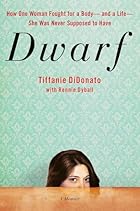
Dwarf--Tiffanie DiDonato (Book Review)

***Note: Worducopia is migrating to a new comment system. Old comments have disappeared, temporarily I hope. If you have any problems placing a new comment, please email me at worducopia-at-gmail and let me know. Thank you! ***

I wasn't expecting to have a hard time with Dwarf. I like memoirs. I had a friend with dwarfism in high school, and so I thought it'd be an interesting read.

I wonder what my friend--a spunky, strong, independent young woman who probably measured 3'6"--would think of this book about a girl whose idea of coping with her condition was to defy medical advice to make herself as close to average height as possible.

The problem with this memoir was not the fact that DiDonato chose to have this unprecedented surgery (though I agreed with her father, her doctor, and her best friend, that it was a bad idea). The problem is that she then describes in agonizing detail all the pain and suffering that she went through after the voluntary surgery--and seems to expect readers to feel sorry for her empathize. I couldn't. I felt heaps more empathy when I read about the boy who purposefully set himself on fire (now, that was a tough read, but well worth it). Yes, Tiffanie, it hurts to break your bones in several places and then pull them apart! You didn't think of that??

So what led a 16 year old girl to make this decision? Maybe it was the eerie lullaby repeated throughout the book, that her mom apparently made up when she was a baby, to remind Tiffanie every day that she loved her even though she was small? Or maybe, being told that her father's reaction to her diagnosis at birth was to divorce her mom? (He rejoined the family when Tiffanie was a young girl, though he and Tiffanie's mom never officially remarried.)

Gratuitous Divorce 101 tip: Children need to be reassured that the divorce is not their fault, that, even though the marriage is ending, both parents still love their children as much as ever. (Or, you know--go the "your dad couldn't handle that you weren't perfect, so he left me when you were born" route. Your choice, I guess.)

Bizarre parenting choices like these--and like letting a 16 year old make a medical decision that her trusted doctor refuses to comply with--could make for an interesting memoir. But the author doesn't seem to have gained any more insight than she had as a teen. In fact, I assumed that she was in her early 20s, publishing an account that she had written as a teen (Nope--she's 32. Plenty of time for revisions). Her mother and herself are written as the brave heroes, and those who tried to talk her into accepting herself as she was (or at least going with a milder version of the surgery) as dolts who wanted her to remain dependent for the rest of her life. The fact that there might have been a gray area in between those two extremes doesn't seem to occur to the author, even now.

The story ends with the clear message that, if she hadn't lengthened her bones, her happily-ever-after ending would have been impossible (Really? She thinks her husband wouldn't have loved her if she were a foot shorter?) A fairy tale ending, a la The Little Mermaid movie. The fact that Ariel stops being a mermaid at the end instead of learning to accept herself with a tail has always irritated me. I guess that's just not the type of happy ending I can embrace.

Here's an interesting short video about Tiffanie, her family, and her controversial surgery: 'Dwarf': Woman Endures Painful, Controversial Surgeries to Grow Taller | Video - ABC News

The soundtrack:  Here's some classic Billy Joel: I Love You Just the Way You Are. Though it doesn't reflect the book, I think it's a good response to it.


I received Dwarf from the publicist, through the LibraryThing.com early reviewer program. 

Monday, November 30, 2009

What Else But Home--Michael Rosen (book review)

I read What Else But Home after seeing author Michael Rosen speak at Wordstock. His story of the way his family came together captured my heart and imagination, and I couldn't wait to read the memoir. It didn't disappoint.

Rosen's 7-year-old son wanted to play baseball with the group of pre-teen boys at the park between their penthouse condo and the Projects. After the game, he invited ten of the guys home to play video games. One thing led to another, and before too long the boys had, in varying ways, become part of the Rosen family.

This is not a fairy tale; nothing is sugar coated. Every single "character," including the author, is flawed. The world they live in is even more flawed.

Yes, the boys are successful in graduating from high school and escaping the dead-end life that many of their friends and neighbors have resigned themselves to (we see this in the prologue so I don't consider it a spoiler). But in order to reach their goals, they have to struggle against a horrific school environment, a blatantly racist social system, and their own inertia. The Rosen's attempts to motivate them and expand their horizons seem to flop more often than they succeed. And yet, the end result is a family--a real, imperfect family--not to replace the families the boys were born into, but to enrich the lives of Michael's original family of four as well as each of the boys.

The author with two of his now-grown boys

Wednesday, November 18, 2009

See You in a Hundred Years--Logan Ward

Have you ever wished you could leave the hustle and bustle of modern life behind and just be? Logan and Heather Ward did. So they sold their place in New York City and bought a farm in rural Virginia. Then they turned off the water and electricity, and spent a year living as though it was 1900. They raised goats for their milk, cheese and butter, planted a garden, canned enough to last through the winter, and used a horse, bicycles, or their feet for transportation. And yes, they used an outhouse, as did their potty-training young son.

See You In a Hundred Years (2007) is one of those We-did-something-crazy-so-I-could-write-a-book-about-it memoirs that I love. The results of the Wards' experiment are funny (they made a lot of mistakes) and inspiring (I will can more than four jars of jam next year!). Best of all is the relationships they develop over the course of the year: with their new neighbors, even the gruffest of whom turns out to be generous and kindhearted; with visiting friends and family who jump into the turn-of-the-century with varying degrees of enthusiasm and aplomb; and with each other.

Saturday, October 24, 2009

What's the problem with problem novels?

On Diversity Roll Call Susan asks about "problem novels"--books, particularly in Young Adult lit, which focus on one particular social issue.

When you think about it, every novel is a "problem novel" in some form--after all, conflict is the cog that moves a plot along, and the definition of conflict is some sort of problem, right? Robinson Crusoe's problem is survival after a shipwreck; Hamlet and David Copperfield both have enough family problems to keep Jerry Springer busy for a week.

But when the problem or the character confronting it is one-dimensional, it doesn't make for an compelling story. A character who's defining characteristic is bulimia or a drug habit isn't interesting. Add a plot that revolves around MC-has-problem/gets-help/the-end, and you've got a novel whose sole attraction is the sort of rubber-necking that Jerry Springer relies on.

But books can have a social issue at their core, and also have literary merit beyond addressing a particular topic. Nick Hornby's Slam, for example, deals with teen pregnancy, from a guy's perspective--adding Hornby's signature style to the YA shelf for the first time. I'm always impressed with Hornby's ability to offer lighthearted entertainment that also takes a deeper look at life.

Speaking of which, Hornby's A Long Way Down isn't a YA novel, but with its focus on suicide, it could be pegged as a Problem Novel. It also manages to be among his funniest and most heartwarming novels. Four people meet on a rooftop on New Year's Eve, each with the intent to commit suicide--a situation which proves to be exceedingly awkward for all of them, and which bonds them in unexpected and far-reaching ways.


Another pair of books that focus on social issues in a three-dimensional way are the memoirs Beautiful Boy by David Sheff, and Tweak by Nic Sheff. Tweak offers the point of view of a young man in recovery from addiction to meth, and Beautiful Boy is his father's perspective. To read the two of them, one after the other, is a powerful experience for adults or older teens.


One thing I've never found is a novel that deals with anorexia without being a one-dimensional problem-focused novel. Does anyone know of one? What do you think about "Problem Novels" in general?

This post was written as part of the C.O.R.A. Diversity Roll call, which is running until tomorrow on Color Online, and there's even a prize involved this week! The next assignment will be posted early next week right here on Worducopia.

Sunday, October 11, 2009

The Sunday Salon: Wordstock

The Sunday Salon.com I spent most of Saturday at the Wordstock Festival, which dubs itself an annual festival of books, writers, and storytelling. Quick rundown of my day's one of the highlights (there would be more, but then it wouldn't be Sunday anymore):

Michael Rosen, author of I-gotta-read-this memoir, What Else But Home, the story of how an upper-middle class Jewish family of four in Manhattan came to befriend--and eventually to take into their family--five boys of different races and ethnic backgrounds. Mr. Rosen gave a moving and hilarious reading of a scene where he and his wife decided to go out for Chinese food with the seven boys in tow, some of whom had never experienced a restaurant before. Later, he talked more in depth about the complicated process of honoring Jewish, Catholic, and Protestant beliefs equally within one family, and the responses of other people to their large, multi-colored family. I heard one excerpt and feel like I know these guys. Can not wait to read this.

Thursday, May 28, 2009

Do-Over--Robin Hemley (book review)

When I first saw the cover of Do-Over, I thought the poor man had gone back to kindergarten for an entire school year. Then summer camp, then prom. I worried for him.

It was a relief to learn that Hemley only spent a week in each place, as well as redoing several other grades, and the high school exchange program he hadn't completed in Japan. (The Japan trip doesn't appear in the subtitle, but it may be the most entertaining and touching part of the book).

For each "do-over," Hemley begins with an essay about what went wrong the first time--sometimes humorous (flubbing his one line in the school play, by tossing a gift box to The Littlest Angel shouting, "Here's your stupid box!") and sometimes tragic (a literally certifiable kindergarten teacher; a sister's mental breakdown when Robin was in eighth grade). Amongst the memories and adventure, Hemley sprinkles in a thoughtful commentary on the changing face of childhood in America. In the section about summer camp (read an excerpt here), he writes matter-of-factly,
No one paid attention to kids when I was growing up, not parents, not teachers, not counselors. Childhood was something you went off and did until you got over it. And camp was one of those places to which kids were exiled, almost as a form of punishment, a warehouse where you suffered while your parents went on that Norwegian cruise.
At age 48, Hemley finds that the camp experience has evolved--kids are supported in trying new things, accepted for who they are, and camp values are posted prominently and reinforced daily by counselors and staff. Revisiting the camp where he was an unhappy 18-year-old counselor, Hemley realizes:
I guess I haven't moved on. Perhaps if I'd learned better lessons as a camper, I'd have made a better counselor. Perhaps if I'd been a better counselor, I might be a healthier adult, a better father.
And this is what makes Do-Over more than just a lark. Hemley reconnects with people and experiences from his past, but more importantly, he forges ahead with the people from his present--his two daughters from a previous marriage, his wife and young child, and a baby on the way (the new baby provides the opportunity to "do-over" supporting his wife in childbirth, too--he was overseas and missed the birth of their first).

Robin Hemley has written several other books, including books about writing (when not in kindergarten, he's got a gig directing the Nonfiction Writing Program at the University of Iowa), and a memoir about his sister's mental illness.

What life experience would you do over if you could? Me, I'd want to go back to summer camp, for sure. I had great camp experiences, but I'd love to redo it without the homesickness. What about you?

The soundtrack: I added one of the songs Hemley danced to at the prom: Sean Paul's Give It Up to Me. It's in the playlist in my sidebar for now, or click on the song title to find it on last.fm.

Title: Do-Over!
Author: Robin Hemley
Publication info: May, 2009 (Little, Brown & Co.) 319 pages

Saturday, May 16, 2009

Jantsen's Gift (book review)

I knew right away that there was some fufu in our family's future. After all, how else could I interpret the uncanny coincidence: almost immediately after I reminisced about my introduction to Ghanaian cuisine, I picked up a memoir that takes place partly in Ghana! But I'll get to the fufu later. First, the book.

Jantsen's Gift had me hooked almost from page one. Pam Cope's memories of the grief that followed the death of her son, and her slow climb back to life, combined seamlessly with journalist Aimee Molloy's beautiful prose.

The pair capture the pain of losing a child almost too well--the first section is a hard read, emotionally. This makes the relief almost palpable when Cope first travels to Viet Nam and begins to embrace life again. The pace really picks up when she's inspired to get involved in helping orphaned Vietnamese children, and then later to help rescue children in Ghana who have been sold as fishermen's slaves by their impoverished families. When I reached the photos in the middle of the book, I was wondering where I could sign up to adopt my own. (Don't worry, it passed.)

The only trouble, for me, comes near the end of the book, when Cope describes choosing which picture to show at a presentation: she bypasses the shining faces of the kids they had rescued from slavery in Ghana, and the orphans in Cambodia or Vietnam. Instead, she chooses the picture of the boy with empty eyes who hasn't been rescued. Then she launches into how much work is yet to be done, and how even little girls have raised enough money to rescue Ghanaian slave children, and there's this undercurrent of "how can you just sit there and do nothing when I sold my 5000 square foot house to help these kids?" that makes me squirm just a little. Is that why she wrote the book, to convince people to head over to Touch a Life and donate enough money to quiet the discomfort in their hearts?

Yeah, probably not. I'm just so cynical sometimes. It's a good book, I'm glad I read it. I should just leave it at that. Let's talk about fufu.

Ben came home from his Sunday School class saying "I'm supposed to try a new food this week," so I told him and Evan the story of Andy's Ghanaian meal. They immediately wanted to try fufu. I looked up some recipes for Ghanaian food online, rejecting the ones that called for beef tripe and cow's feet or pounding cassava by hand. I ended up combining a recipe for Chicken Peanut Stew from the U. Penn African Studies dept. with one from Family Fun magazine and a few additions of my own. It turned out to be really easy to make.

Ali's Quasi-Ghanaian Meal


The Chicken Peanut Stew

1 chicken, cut up (I skinned it, too)
1 onion, chopped
1 1-inch piece of ginger
2 cups water
1 Tbs. oil
2 Tbs. tomato paste
1 28-oz. can diced tomatoes
2/3 cup peanut butter (I used fresh ground)
1 yellow pepper cut in bite-sized pieces (you could use any veggie--one recipe called for okra and eggplant)

Throw chicken in a big pot with the water, ginger, and half the onion, bring to a boil and simmer till the other stuff is ready, stirring occasionally to keep from sticking and adding more water if necessary. In 1 Tbs. oil in a deep frying pan, fry the rest of the onion and the tomato paste until the onion's cooked (about 5 minutes), then add the diced tomatoes and peanut butter. Stir to combine, then add to the stuff in the big pot along with the veggies and cook until the chicken is tender and you're done dealing with the fufu. This would also be good with rice or potatoes.

The Fufu

U. Penn said to use instant mashed potatoes and Bisquick, so that's what we did. We followed their instructions exactly and came out with a giant plop of stuff that looked sort of like really thick mashed potatoes.
Here it is on a plate, posing with the chicken. It looked better in person but I'm not a very good photographer. Ben contemplates the meal before going to wash his hands thoroughly. Those are bottles of root beer on the table, by the way.
And at last, the guys dig in, while Mom takes one last photo. They're evaluation? Evan: It burns me! (Tip: let food cool a bit before digging in with your hands). Ben: It tastes like potatoes, but not. I like it. Chris: Not quite as good as Andy's fufu. Me: Eating with your hands makes clean-up a breeze!
The soundtrack: When I sent Andy the link to my other post, he suggested listening to Amadou Et Mariam from Mali. So, here they are!

Monday, May 4, 2009

First Comes Love, Then Comes Malaria--Eve Brown-Waite (book review)

I'll never forget the day my friend Andy came over soon after he'd returned from two years spent in Ghana with the Peace Corps. He sheepishly told us that after grappling with an insatiable hunger all morning, he'd grabbed his mother's box of tapioca and cooked up a big pot of it for breakfast--the closest thing to the starchy fufu (made from cassava root, like tapioca is) he'd been eating three times daily for two years.

I think I said something like, "Foofoo? They actually call it that with a straight face? Foofoo?"

"Yeah, I'll make you some. Takes some getting used to, but it's good with stew."

He did make us fufu one night for dinner, along with a peanut stew. We scooped it out of a communal bowl with our hands (okay, I eventually bailed on the communal bowl and dished myself a plateful) and he told us stories about the Ghanaians and Peace Corps volunteers who had been his neighbors and friends. Afterwards he thanked us heartily for letting him share a little bit of Ghana, but it's been nearly twenty years since that night and I've never forgotten it. Thank you, Andy.

Reading First Comes Love, Then Comes Malaria is a similar gift--like having a friend return from abroad and give you the real scoop on the wider world. Brown-Waite manages the tricky business of communicating homesickness and culture shock while respecting different approaches to life, without coming across as a whiner. The contrast between her reactions to things and her "Peace Corps poster boy" husband's reactions adds humor and perspective.

The Soundtrack: This was a tough one. I couldn't find anything on Playlist. Found a video of Philly Lutaaya, a Ugandan singer who did a lot towards publicizing the AIDS situation in Africa. Almost perfect (Brown-Waite worked on AIDS education while in Uganda), but long, and I'm not crazy about the quality of the video. So I went with the upbeat song instead. This is Ragga Dee, with Ndigida.

Monday, March 23, 2009

The High Road Award--Philip Lee

Like many bloggers, I pride myself on honesty. I don't tend to be snarky, but I don't see the point in gushing over every book that was just Pretty Good, either. Some authors understand this; others get hurt feelings. I've seen author comments that made my toes curl. The commenter never does himself or herself any favors by curling people's toes. Word spreads around the internet and the negativity associated with the author's name lingers long after the review would have been forgotten.

Today Philip Lee left a really thoughtful comment on my review of his memoir. I liked the book, but pointed out several ways in which it wasn't what I'd hoped it would be. Lee took the high road, cordially responding to every criticism I had of Bittersweet, in a nondefensive way, that made me think.

Memoir is such an interesting and often controversial genre right now. In a time when some writers have been called out for embellishing the truth, Lee made every effort to be accurate and to protect the privacy of the other people involved in his story. Me? I was bummed because I wanted more dialogue and details. As Lee says, that's not the book he set out to write. In his words, Bittersweet is,
in part a memoir but also an exploration of marriage, love, families, and how to get happy. My narrative holds the book together but the subject matter is universal (I hope).
Please read his full comment, here. After reading Mr. Lee's excellent points, I wouldn't change my original post--but I'm so glad he took the time to respond in a constructive way that adds more depth to my review, by contributing a perspective that's quite different from my own. No, hold on--I would change my post. I'd add this: Every criticism I have can be boiled down to one thing: it wasn't the book I thought I was sitting down to read.

I'm giving the High Road Award to Professor Lee. I created this new award, for authors who take the time to leave meaningful comments on less-than-glowing reviews of their books. Feel free to bestow it on other authors, any time it's called for.

What author would you offer the High Road Award to? Has your opinion of a book ever been swayed by a comment (or another review), after the fact?

----------------------------------------------

You can learn more about Bittersweet, on the Goose Lane website or the author's website, The Mysterious East. If you're interested in a journalist's exploration of marriage and relationships, written in a style so personable that you'll wish you could have the author and his whole family over for dinner, I highly recommend giving Bittersweet a try.

*thanks to wigflip.com/roflbot for the image macro generator that added text to the public domain image I used for the award graphic.

Thursday, March 19, 2009

Bittersweet: Confessions of a Twice-married Man--Philip Lee (book review)

Philip Lee has survived "the dark year" - a year in which two newly divorced brothers rough it, with no running water or indoor plumbing and contend with a feisty band of squirrels that inhabit their kitchen. Dishes are washed in the rain, coffee is made with a can and a blowtorch, a bucket becomes a make-shift shower, and renovation projects are abandoned almost as soon as they are started.

This first paragraph of the publisher's blurb totally hooked me. Grown brothers, living together again while recovering from painful divorces, contending with feisty squirrels! I was eager to be entertained by their exploits and touched by the brotherly love.

You know how sometimes books start out with a summary of what's been going on, and you're not hooked yet but you keep reading because pretty soon the thing will kick into gear? Bittersweet never kicked into gear for me. It wasn't poorly written. It just lacked some of the things I look for in both fiction and memoir. Dialogue, for example.

Author Philip Lee lets the reader peer into his heart as he moves from married man to divorced man to married-again man. His examination of himself and the institution of marriage makes for an interesting read, but he never invites the reader in off his proverbial front porch. He describes the house (feisty squirrels, water-bucket shower, and all); he talks about his kids, his brother, the women he loves; but the reader never quite steps through the threshold to meet them in person. Which is a shame, because by the middle of the book I had connected with Lee and was really rooting for him. But, should I have cared if he got together with the woman he eventually married? I didn't know her well enough to decide if she was a good-guy or a bad-guy (she was at the root of the downfall of his marriage, after all), and while I was still puzzling over that, he'd already sorted through his feelings, gotten remarried, and was on to the next hurdle.

Philip Lee is a professor of Journalism in New Brunswick and in addition to writing for various newspapers has published two other books--Home Pool: The Fight to Save the Atlantic Salmon, and Frank: The Life and Politics of Frank McKenna. Many were more impressed with his memoir than I was, including all these people.

Saturday, March 7, 2009

Astonishing thoughts about Diana Joseph's "I'm Sorry You Feel That Way"

To: Title Elves
Re: Those astonishing, attention-grabbing titular* words

Whether you're the author, the agent, or the editor, I realize that snappy titles aren't easy to come up with. You strive for a word that'll grab readers' attention and make them want to yank your book off the shelf over all others, and you never really know if it worked or not because, did we read the book because of the title? The cover? Because our friend told us it was great despite the stupid title and ugly cover? You'll never know. We don't even know. But I'm here on behalf of readers, to let you in on a little secret.

The word Astonishing? It's run its course. We're over it. Please replace it with something snappier and unique such as....Snappy. Or Unique.

You see, we've read Barry Lyga's Astonishing Adventures of Fanboy and Goth Girl, and M.T. Anderson's Astonishing Life of Octavian Nothing. There was Christopher Grey's Leonardo's Shadow: Or, My Astonishing Life as Leonardo da Vinci's Servant. Let's not forget Clare Morrall's Astonishing Splashes of Color (which takes its title from a description of Neverland in Peter Pan) shortlisted for the Man Booker prize in 2004. And now we have Diana Joseph's newly released memoir I'm Sorry You Feel That Way: The Astonishing but True Story of a Daughter, Sister, Slut, Wife, Mother, and Friend to Man and Dog.

And here's where the title fails, dear Title Elf. (I'm not even going to touch the fact that Ms. Joseph wrote a chapter lamenting her son's use of the word slut and then, for shock value, you smacked it onto the cover of her book for everyone else's young sons to glimpse.). I enjoyed this memoir--in turns funny, touching, and disturbing--but I have to tell you honestly that I waited through the entire 206 pages and the astonishment never came.

Maybe the astonishing part was supposed to be the fact that Diana Joseph appears to define herself entirely in relation to men? Each of these fifteen stories revolves around a male in Ms. Joseph's life: her father, her brothers, her son, her lovers. Her boss. The neighbor she has breakfast with occasionally. Yes, even the dog is male.

Her mother makes a brief appearance or two, but no female--not even the author herself--not even the cat--merits her own chapter. I think that's a significant decision on the part of this talented creative writing professor, and yet it's an issue she chooses to scarcely touch. It's a little unnerving.

But astonishing? No. Unfortunately, even in the twenty-first century, that's not astonishing at all.

----------------------------------------------------

*Titular. Now there's a word I've never used before.

Sunday, December 7, 2008

Comfort Me With Apples--Ruth Reichl (Book Review)

I read Comfort Me With Apples as part of the New Classics Challenge.

So...a new Classic? Really, Entertainment Weekly? Because a classic, to my mind, should stand the test of time. At only seven years old, Comfort Me already seemed dated to me.

Ruth Reichl writes about the time when she became a restaurant critic in the seventies, adding a recipe for each period of her life. There's a whole chapter about the cuisine-world's discovery of the merits of garlic. Though she's writing twenty-five years later, Reichl doesn't give the sense of distance that would make this ironic and fun. Even the recipes seem dated to me, like something out of one of my mom's old cookbooks. Maybe that's the point, but Soy Sauce Chicken, made with ten cups of soy sauce and ten cups of sugar for a 3 1/2 pound chicken? Yikes. Soup made with 1/2 stick of butter, heavy cream, four eggs and Gruyere cheese? Not in this house. Fried Capers and Calves Brains with Sherry Butter Sauce, ooh, I think my dad made something like that in the seventies. Maybe I should write a food memoir of my own.

I tend to stay away from celebrity memoirs because the name dropping drives me nuts--I couldn't care less how Famous Person X first met Famous Person Y. It didn't occur to me that this would be a celebrity memoir because I'd never heard of Ruth Reichl. I'd also never heard of many of the people whose names she dropped (or, rather, clunked) into the prose. Clearly, I'm out of the culinary loop, because "Nancy Silverton baked [my wedding] cake, and Alice cut it, along with Marion Cunningham and Cecilia Chiang" meant little to me (though I did know who Cunningham was) until I hit Google for help. Then at least I knew why I was supposed to go, "Ooooh, wow!" instead of rolling my eyes. As for Wolfgang Puck, who plays prominently in the narrative, as canned soup goes, his brand is pretty good. So, the author Knew Him When, and a bunch of famous people called him on the phone one day while she was with him. Are you impressed yet? If so, you might love this book.

I will say this for Reichl--the lady has guts. As she recounts a period of her life when she bounced from one infidelity to the next, with stops along the way for self-indulgent six-hour meals that made my stomach hurt just reading about them, I found myself simply feeling sorry for the two men she was torn between. Then a child became involved, and, oh my goodness. Never have I read a memoir in which the writer/narrator made herself into such a blatantly unsympathetic character.

Ruth Reichl also wrote Tender to the Bone, which I've heard is very good, and more recently, Garlic and Sapphires: The Secret Life of a Critic, as well as a number of other books about food.

The Soundtrack: I chose Joni Mitchell's Free Man in Paris, in honor of Reichl's magical two weeks there with another man while her husband was busy building sculptures across America.

Monday, November 3, 2008

My Father's Paradise--Ariel Sabar (Book review)

My Father's Paradise started out as one of those books I knew I wanted to read but, for weeks, didn't actually crack open. It seemed like a serious subject . . . I was ready for something lighter . . . I'd gotten a little memoired out. . . .

Finally, the day came. I opened the book and began to read, and immediately wondered what I'd been stalling for. This wasn't the dense read I'd been prepared myself to dive into. For one thing, instead of starting the story with his ancestors in Kurdistan, like I expected, Sabar begins with himself as a typical LA teen, desperate to fit in with the cool crowd, resenting his father Yona for being a little too . . . foreign.

Ours was a clash of civilizations, writ small. He was ancient Kurdistan. I was 1980s L.A. He grew up in a dusty town in northern Iraq, in a crowded mud-brick shack without electricity or plumbing. I grew up in a white stucco ranch house in West Los Angeles, on a leafy street guarded by private police cruisers marked BEL-AIR PATROL.

Sabar alludes to Yona's work as a world-reknowned professor in his field, his side job translating the Aramaic Jesus spoke, for the movie Oh, God and for an episode of The X-Files. He describes how the birth of his son gave him second thoughts about his own abrupt departure from the nest. All this in the first eight pages. By page nine I was ready to travel with young Mr. Sabar wherever he wanted to take me. Kurdistan? Sure, let's go. Here's some Kurdish Jewish wedding music to get us in the mood:


But wait! These Kurdish Jews aren't in Kurdistan anymore. In fact, when Ariel and Yona returned to Zhako together late in the book, there were no Jews left in the village where Yona spent the first ten years of his life. In order to learn about the deceased great grandfather he never met, Ariel Sabar has to go to Jerusalem to interview the Kurdish Jews there who still remember him.

By the time he introduces the history of his father's ethnic subculture, it comes across less like a history lecture than like the answers to burning questions I never knew I had. Hidden in the mountains of Kurdistan, cohabiting peacefully with the local Muslims, the Jews quietly continued speaking Aramaic for twelve hundred years after it was replaced by Arabic as the dominant language of the middle east . . . until 1950-51, when they left, practically en masse, for Israel.

Rarely have I read a book in which such a frame has been used so effectively. Honestly, I'm usually distracted and annoyed when a book starts at point B and then spends a couple hundred pages getting back to B from point A where the story really begins. But in My Father's Paradise, the story of Yona's journey from the tiny village of Zakho to the slums of Jerusalem to a PhD program at Yale University is doubly meaningful because the reader simultaneously sees not only the journey of the father, but that of the son uncovering his father's history.

Want to know more? Visit Ariel Sabar's website at Arielsabar.com, read an excerpt, or check out more reviews at:
Bookworm's Dinner
Bermuda Onion's Weblog
(Have you reviewed My Father's Paradise? Post the link in the comments and I'll add it here)

Tuesday, October 7, 2008

Memoir

The popularity of Memoir seems to be increasing exponentially over the past few years, with both readers and writers. At any writing conference, every third person will tell you they're working on a memoir. When agents hear this, their eyes glaze over slightly and they say things like, "Memoirs can be a really hard sell."

And yet, they are selling--the New York Times Bestseller list is full of memoirs--so I think what they mean is, "Memoir can be hard to write well." Most people's lives aren't that different from anybody else's--so why would somebody that's not related to you want to read a book about you? What's the hook? "I was abused," isn't a good enough answer. "I was abused by my delusional mother who gave me away to her psychiatrist where I fell in love with a pedophile at 13," apparently is.

Some of my favorite books have been memoirs, from the Little House books, to James Herriot's All Creatures Great and Small series, to Frank McCourt's 'Tis to Nic Sheff's Tweak and David Sheff's Beautiful Boy. But too often, a memoir is merely a chronicle of events. Celebrity memoirs, in particular, tend to combine this chronicling with name dropping for a nauseating exercise in egotism (and yet when I picked up Christopher Reeves' Still Me off the shelves of a beach house one weekend, it drew me in completely--a book I'll never forget).

So, what makes a memoir a good read?

The two main elements of memoir, like fiction, are plot and character. A combination of the two is necessary, of course, otherwise fascinating stuff would happen to nobody, or amazing characters would watch other characters sleep. Ask someone to describe their favorite book and you can tell immediately if they like their books more plot-driven or character-driven. Generally, mystery-lovers won't tell you that Dick Francis's Whip Hand is about a guy who used to be a jockey until he lost his hand in an accident and became a private investigator; they'll tell you it's a racehorse mystery in which a guy is hired to find out why certain horses have been performing poorly.

Ask me about Whip Hand (which I read when I was 14) and I'll tell you all about Sid Halley, the self-sufficient detective who struggles to come to terms with the injury that changed his life. But I had to look up a synopsis of the book in order to tell you what the mystery was. I knew it was something about horses. All Dick Francis' plots are about horses, and they tend to run together in my mind; as the years go by they begin to feel formulaic. But I read every single book he writes because the characters are worth getting to know.

Which brings me to memoirs. Because even the most interesting events in a life won't capture my attention unless the people do, and making characters come alive on a page is hard.

One year I found myself compelled to read every memoir of the holocaust I could lay my hands on. I don't know why. But what happened over those few months was that the victims and survivors came alive for me. By the time I'd moved on to lighter fare, those memoirs had changed me.

Which is why I thought Resistance would appeal to me. It begins as the diary of French resistance member Agnes Humbert, as she goes from being an art historian at the onset of World War Two, to prisoner, to factory slave laborer. Plotwise, there's a lot going on.

In terms of character, though? The dryest book I've read in a long time. Agnes writes of missing her mother and her grown sons terribly, and of her affection for the people she encounters both inside and outside the prison. She may have missed her family very much, but I didn't miss them because I'd only met them in passing. There was little distinction between most of Agnes's comrades. When it got to the point where they were all on trial for treason and I realized I was bored at the height of a major turning point (I knew from the dedication, after all, which of them would be executed), I stopped reading.


John Grogan's The Longest Trip Home is the prequel to his very popular Marley and Me, which I've never read but had heard good things about. Many readers find Grogan charming and easy to relate to. For me, the first section of the book was as familiar as if I'd read it before: Baby Boomer from nice Catholic family fails as altar boy, commits pranks with friends, gets girlfriend, smokes pot. I'm guessing he goes to college, smokes more pot, gets another girlfriend, gets married, raises a family and eventually (because it says so in the prologue) his parents die. It's Every Baby Boomer's story, I've been hearing it for all of my 41 years, and I'm bored with it.

All character, no plot to speak of. I stopped reading.


Blue Genes is another Baby Boomer's story, but Kit and Tony Lukas's family was far from typical and his early childhood was tinged with tragedy. Kit (aka Christopher) has written the book to try to make sense of his brother's death by suicide and how it relates to their family history. For me, the set-up, starting with the scene where Kit learns of Tony's death before skipping backwards, was kind of like someone telling you how the movie ends--I hate that! Lukas also tells the reader right off the bat that he never thought of himself and Tony as being friends . . . then goes on to show himself and Tony relying on each other to get through a difficult childhood. Puzzling. But this is one I'll keep reading. It's got the combination of character and plot that, in my opinion, makes memoir work.
Saturday, August 23, 2008

The Film Club--David Gilmour

David Gilmour was afraid for his son. Jesse was miserable in high school, and Gilmour's attempts to help were creating a rift between them. "You've lost the school battle," the author, in an interview with CBC TV, recalls his wife (Jesse's stepmother) telling him. "Don't lose the kid."

In an act of desperation, Gilmour offers his 15 year old a deal: if you'll watch three movies of my choosing per week with me, you can quit school. Jesse agrees, and the Film Club is born.

Thus begins the process of unschooling (or deschooling): Gilmour picks DVDs that contain what he thinks his son most needs. At times the focus is on film production, good writing or good acting. Other times, he picks a theme to fit the issues Jesse is dealing with in real life. Surprisingly, given that Gilmour is a former film critic, The Film Club gives a fairly superficial treatment of the movies themselves. Jesse himself seems less interested in his dad's opinions about movies, than his reassurances and reflections about girls, about what makes a real man, and whether Jesse's becoming one:
Then he said, "Do you think it was unmasculine of me to have cried?"
"What?"
"When we were breaking up. She was crying too."
"I can imagine."
"But you don't think I was a baby or anything?"
I said, "I think there would have been something wrong with you, something cold and unpleasant, if you
hadn't cried.
For homeschooling parents or those considering pulling their kids out of school, Gilmour's film choices may not be the best guide. (Showgirls but not Schindler's List? The Texas Chainsaw Massacre but not The Tuskegee Airmen? Robocop but not Roots?) But as a portrait of a father-son relationship in transition from adolescence into adulthood, this memoir is at once poignant, heartwarming, and distressing. Trading those last years of school for more freedom and more time together was a risk on Gilmour's part, but, as he says in the CBC interview, Jesse "was becoming who he is, and just because I couldn't tell what he was becoming doesn't mean he wasn't becoming something. I just knew enough to stand back and water this exotic plant and have faith that it would actually reach towards the sun, not towards the sewer."