Showing posts with label Interviews. Show all posts

Thursday, April 4, 2013

What Would Jane Austen Do?

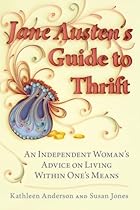
Today I'm interviewing Kathleen Anderson and Susan Jones, authors of Jane Austen’s Guide to Thrift: An Independent Woman’s Advice on Living Within One’s Means.

Jane Austen's Guide to Thrift is a fun way to bring a little Austen magic into your modern-day life. Using examples from each of Austen's books, the authors give advice on everything from "Household Economy the Charlotte Lucas Way" to "Austen's Rules for Refusing, Accepting, and Giving Gifts." The advice would be useful to anyone setting out on their own for the first time, but I, of course, wanted to start with the really important things in life: what to read.


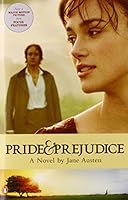
Q: For readers who are new to Jane Austen and perhaps new to classic literature, which of her novels would you recommend they start with, and why?

For readers new to Jane Austen, start with Pride and Prejudice! Austen pulls out all the stops with a bright, amusing heroine, Elizabeth Bennet, matching wits with a wide variety of frenemies: the boring yet annoying cousin who’s looking for a bride, any bride; the wicked womanizer who tries to charm practically every female he meets, in addition to the aristocratic snob who looks down on Elizabeth and her family, and yet can’t resist the love he feels for her. Elizabeth’s social networks bring her together with these Regency gentlemen again and again, sparring verbally on the dance floor, jousting with words in the shrubbery, and conversing with energy in the drawing room. In a world menaced by duplicitous suitors and shameless sycophants, Elizabeth Bennet proves a feisty advocate for virtue and courage, and she brings out the potential heroine in all of us readers.

Q: What modern-day book (or books) would you recommend to readers who have enjoyed Austen's novels?

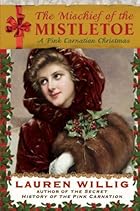
Susan: I love the Pink Carnation series by Lauren Willig, set in Regency England and focused on espionage in the Napoleonic Wars. My special favorite is The Mischief of the Mistletoe, a book in which Jane Austen features as a character. I love the characters and the plot, and most of all, it frequently made me laugh out loud.

Kathleen: I love Jane Austen best, and will accept no substitutes, except possibly my own.


Q: Which of the pieces of advice in your book do you find hardest to follow?

Susan: The pieces of advice that I personally have trouble with relate to getting regular exercise. If reading took care of getting me into shape, I’d be all set. However, in spite of my good intentions, I frequently find myself turning those pages rather than making my daily walk, breathing fresh air and building my body chemistry.

Kathleen: When planning a vacation, I have a hard time spending money on hotels. I always instinctively ask myself, “Is there a friend or relative who would welcome a visit?”

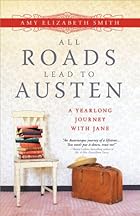
Q: Last year, Amy Smith wrote about her traveling Jane Austen book club across Latin America, in All Roads Lead to Austen. Do you agree with Smith that Austen's work has universal appeal, across cultures and socio-economic statuses? 

In 2010, Vice Premier Wang Qishan of China revealed that he enjoyed reading Austen’s work for pleasure, and Sense and Sensibility was his favorite of all, with its precarious struggle for equilibrium between sensibility/passion and sense/reason. If that doesn’t prove a universal appeal, I’m not sure what would. Austen appeals across age divides, cultural differences, socio-economic groups, and genders because her works deal with basic issues: loyalty, love, honor, courage, and virtue among them. These are qualities that most of us admire and struggle to emulate in our lives, whoever and wherever we may be.

Thanks, Susan and Kathleen, for sharing your insight  Austen, both in your book and in this interview.


Dr. Kathleen Anderson has published numerous essays in academic and arts journals, such as Persuasions: The Jane Austen Journal. She earned her B.A. from Harvard University and her M.A. and Ph.D. in English from the University of Iowa. Anderson has taught at the college level for over twenty years, and specializes in nineteenth-century British literature and Women Writers. She is currently a Professor of English at Palm Beach Atlantic University in Florida.

Dr. Susan Jones has published essays in academic journal and books on subjects ranging from Jane Austen;to the role of women. Her work has appeared in Persuasions: The Jane Austen Journal and her creative work has appeared in Quilt magazine and in The Santa Fe Review. Jones has taught at both the secondary and college level for over twenty-five years; she specializes in the areas of Medieval and Renaissance British literature, but has always had an interest in Jane Austen. She is a Professor of English at Palm Beach Atlantic University.

Friday, November 20, 2009

Family Consititution Q & A

I've read a lot of parenting books. Not as many in recent years because I just haven't felt the need, but there was a time when my kids were little, when I read parenting books instead of fiction. Maybe it was my own version of fiction--imagining the happy family with kids out of diapers and old enough to engage in conversations about things other than dump trucks and firefighters.

So when I was invited to review Your Family Constitution and interview the author, I was eager to see what I've missed in the past several years as my reading lists have focused more on the outer world and less on my own family. I asked author Scott Gale which books stood out for him. Here's what he said:

I found bits and pieces out of lots of books, but most of my research was done through talking to other parents (as well as my own personal experiences). Through conversations, I was able to identify the most common problems that people seem to struggle with, as well as some creative solutions that I share in Chapter 8.

Well, readers (those of you with kids), what are your favorite parenting books--the one or two that truly stuck with you? Or are you more likely to get your parenting ideas by talking informally with other parents, rather than reading books? I think I'll make a list of the Best Parenting Books Ever. I already know which books will be at the top.

Here are a few other questions I asked of Mr. Gale:

Ali: I'm curious about what modifications you've made to the Constitution since the time when you finished the book.

SG: We’ve made lots of modifications, but no major ones. Bedtimes have gotten later, chore responsibilities have changed, and our family meetings occur less frequently during the kid’s football season. We have made other rules, but we don’t add the more simple ones to our Family Constitution.

Ali: In the book, you talk about rewarding yourselves for doing well, but I didn't see that outlined in the actual Constitution in the Appendix. How did your system of rewards work?

SG: Our system of rewards is mainly geared towards the kids. My wife and I can earn the right to select a restaurant or movie, but nothing too exciting. Our discipline mainly comes through global family rules (i.e. swear jar), as well as temporary goals for specific purposes (i.e. earning the ability to watch football via maintaining a training schedule for a ½ marathon that I recently ran.

Ali: Another thing you mentioned in the book was that you had to earn certain things, or put money in the swear jar--in other words, the rules applied to you as well. The Constitution itself seemed pretty focused on the kids, though. Were the adults' rules written up, also?

SG: Because our goals are often more temporary and less precise than for the kids, we don’t record many of them in the Family Constitution.

Ali: Which is interesting, because actually, I could make the same resolutions this year that I made five years ago and they'd still be relevant. On the other hand, five years ago my now-twelve-year-old needed to be reminded to bathe, and my now-nine-year-old was just outgrowing his toileting chart. Now, we have to remind my 12-year-old to get out of the shower, and the nine-year-old is on the verge of needing deodorant.

What about you, readers? Are you inclined to formalize your parenting ideas with a written contract, or "constitution?" And how long do you think you'd stick with it, if you did?

Tuesday, September 15, 2009

It's Meet-a-blogger Day!

As part of Book Blogger Appreciation Week, I've had the pleasure of interviewing Katie, a twenty-five year old YA librarian from the Chicago area, who blogs at Read What You Know. Katie has only been blogging since June, so obviously this is her first BBAW--she hopes that participating in BBAW will help her cement her book blogging and make new blogging friends. Katie says, "When I'm not blogging, reading, or being a librarian, I can be found in any of the local Chicago theatres, watching Broadway musicals. I just love them." Read on to get to know more about Katie. And, if all goes well, there will be an interview with me on Katie's blog at some point today. Seeing as I spaced on sending her the answers to her questions until, er (:::Ali checks her watch:::) 14 minutes ago, we'll allow her some slack, shall we?

Edited: Katie got my interview posted in an astounding 23 minutes! You rock, Katie!

What's the highlight of your job as a YA librarian?


That's an easy one -- sharing books with teens. My day is made when I have a teen come into the library just to chat about a book they've been reading. Or if they come into the library to talk about school and then ask me what's new in the section.

Do you have an opinion about adults who blog about teen books, just because we like them?

I think that teen books need adults just as much as they need teens. Adults are the ones who control a lot of the book industry. Adults choose the books to be published, choose the books sent to libraries and bookstores, and choose to read these books of course! Anyone who loves books should be happy that people are reading books, no matter how old the reader or the intended book audience.

Have there been any books you've thought teens would love, that they surprised you by not generally liking them as much as you thought?

The "Blue Bloods" series didn't go over like I thought it would. When I heard about the books, I thought they were genius -- marrying the "Gossip Girl" and "Twilight" population in one series. But I think the book wound up being too melded. Not enough gossip and drama, not enough blood-sucking fiends and love triangles. But it has found it's own audience, it just wasn't who I expected to check it out.

How about books teens love that you just don't see the appeal of?

I see the appeal of horror and zombies, but I have a hard time getting into them personally. I've had "The Forest of Hands and Teeth" checked out for nearly two weeks at this point (our checkout time is three) and I keep putting it off. I'm scared of the possible gore!

Are there blogs or other sources you routinely turn to for reviews of YA books when deciding what to read/order?

Absolutely. I read a *bunch* of YA review blogs, both professional and non-professional. I try to read across a wide variety of ages too. So, yes, I read teen blogs and adult blogs. I love using the amazing resources that YALSA (Young Adult Library Services Association) puts out every year, including the BBYA (Best Books for Young Adults) committee's work and other booklists. I also read VOYA (Voice of Youth Advocates) -- a special review journal/magazine that only reviews young adult books. I also let my teens do a fair amount of selection. They know that they can always request a book and I'll do my best to get it in the collection.

I'm curious about the population of teens you serve--is it pretty diverse? What sorts of things do you do to meet the needs of teens of varied backgrounds?

I serve an incredibly diverse population. At the 2000 census, my community was 54% Hispanic/Latino. We are predicting that the number is actually closer to 75% for the 2010 census. The rest of the community is split about half and half between African-Americans and Caucasians.

I have the benefit of being raised in this community my whole life, so it's easy for me to relate to my teens because they know I went to their high school and they see me around the neighborhood, eating out at the local pizza place and shopping. (Like Target. Every time I go, I run into someone from the library!)

One of the things that I really try my hardest to do is to listen to what teens want. Some of my teens really take to reading Hispanic authors like Isabel Allende, Sandra Cisneros, and René Saldaña. Some of my teens don't want to read Hispanic authors. What I try to do is to present options to them. So, I stock a little bit of everything and make sure to let them know that whatever their reading choice is, it's fine by me.

Do you ever take the time to read books that aren't YA?

Yes! Occasionally, heh. I actually made a New Year's Resolution to try and read a bit more out of YA. It hasn't gone so well... Right now, I'm reading "Columbine" by Dave Cullen. I have "Julie and Julia" by Julie Powell (43 holds), "The Lost Symbol" by Dan Brown (somewhere around 558 holds), and "Her Fearful Symmetry" by Audrey Niffenegger (71 holds) all on hold at the library. Mostly popular reads.

How about a favorite book (or top 2-3) of the year?

Yikes. I think this is the hardest question yet. I loved "Jellicoe Road" by Melina Marchetta (this year's Printz Award winner) and refused to read another book for about a week after I finished it. "Hate List" by Jennifer Brown ripped my heart out, stomped on it, and mended it all under 420 pages. And of course, I read both "The Hunger Games" and "Catching Fire" and spoiler-free, cannot wait until the third book comes out. "Fire" by Kristin Cashore was also beautiful. I can't wait until it's out in the world. It's been a great year for YA.

It's been great getting to know you, Katie, and I hope BBAW turns out to be all you had hoped it would be!

Monday, June 29, 2009

The Local News--Miriam Gershow
(book review and author insight)

The Local News, by Oregon author Miriam Gershow, is not so much the story of a missing teen. It's more the story of the resulting uncertainty and sorrow on the family left behind.
In many ways, fifteen-year-old Lydia is better off without her big brother around--Danny and his friends used to tease or ignore her; now she has near-celebrity status at school and is even included in his friends' social circle. Her parents are lost in their grief, but then again she always did come second to her brother. And, while she's somewhat nostalgic for the childhood Danny, truthfully she didn't like him all that much as a teen. The result is a complex protagonist with a riveting story to tell.
The story is told in hindsight, from the perspective of Lydia as an adult, and in fact the final forty pages take place ten years later. I had mixed feelings about this ending, and was glad to have the opporunity to ask author Miriam Gershow about this as well as other aspects of her writing process with this, her debut novel.


Ali: I'm always interested in the process by which a story unfolds in a writer's mind. Did you know from the start what had happened to Danny, or did you play around with different outcomes as you were fleshing out the story?
Miriam: There were very few things I knew at the outset of the book. I had only the briefest of sketches in mind: this would be the story of a girl whose brother disappeared and that girl would have ambivalent feelings about the disappearance. Everything else unfolded as I went along. However, one of the few things I knew was the outcome to Danny’s disappearance. I didn’t know the specifics, but I did know generally how it would be resolved. That outcome just made the most sense for me, in terms of the story I wanted to tell about Lydia and how she grew up and through this experience.
Yes, I thought the outcome was fitting. But there was one point where the private investigator started looking in a direction which totally took me by surprise, so I was curious whether you'd explored that possibility through writing it out. It could have been a totally different story!
Indeed, it could've gone in a different direction, though the whole time I was writing the Denis/investigation sections, I knew exactly the outcome of things.
What did you struggle with in this book? Was there one particular scene or character that was tough to write?
I have to say, I was very, very blessed with the story coming to me with a minimum of thrashing and flailing about on my part. Often, I really have to wrestle with projects for them to become manageable to me. That largely wasn’t the case with The Local News. Now my current project, that’s another story. But Lydia’s voice hooked me from the start, and following her though these events was–for the most part–not a tremendous struggle.
That said, I definitely had a harder time with the scene that comes about three-fourths of the way through the book, where Lydia has a big confrontation with someone on the sidewalk of a nearby neighborhood. I’m trying to describe it without spoiling it for those who haven’t read the book yet. In that scene, I was pushing Lydia past her normal limits and defenses, and it was quite a bit of work – and quite a few drafts – to get myself and her there. That’s probably the scene that I lost the most sleep over and shed the most tears – mostly cathartic ones – in the process of writing.
I remember that scene well, and the thing that stuck out for me about it was that I realized I had no idea what Lydia was going to do. It was at that moment that I realized how much she'd lost her way, through all that had happened.
That’s satisfying to hear, as that was exactly my intent.
Though the book is written from an adult perspective looking back on her teen years, it seems to me that teens would be drawn to it, too. Has there been any thought to marketing it as a crossover adult/YA book?
There hasn’t been thought to marketing it as a YA book. I have always thought of this as an adult novel, maybe because of the interiority of much of it, or the spots of brutality, or just because I’ve always seen myself as an adult fiction writer. However, when I was fourteen, fifteen and sixteen, I was reading adult fiction. I agree that teens could very much be drawn to this story. A dear friend’s 14-year-old daughter recently read it and loved it. So I can only hope more teens will do the same, even if I don’t consider it specifically a YA book. Certainly, the more readers who can relate to Lydia and relate to the story, the happier I am as an author.

The last 40 pages jump ahead 10 years, giving an Epilogue-ish feel to the end. Could you tell me a little bit about why you decided to do that? Did you ever consider ending the book at a different point?
Like I said, I didn’t have a clear vision of the whole structure of the book when I began writing it. But relatively early on, I started to think that the final part of the book had to take place when Lydia was an adult. It seemed to me that a trauma like this couldn’t be resolved at the point when it occurs. Years would have to pass before someone could begin to truly make peace with such an event. So I knew the book couldn’t end when Lydia was still a teenager.
That makes sense. A person really doesn't get closure on certain things without the perspective that only time can offer.
And on a purely selfish level, I really wanted to write a reunion scene. I wanted to see how all the other Franklin High characters, who I had very much come to love, had fared in adulthood. Originally the scene was much longer, with details about even more of the secondary characters. Smartly, it was edited down to its essentials before publication. But clearly I had a real need to revisit these characters and make sure everyone turned out okay.
I liked seeing how everyone turned out, too. Although in some ways the epilogue (if I can call it that?) left me with more questions than answers about Lydia, and whether she would ever be okay.
I've heard that response from other people too. I’m wary of saying too much about my intent, because I respect reader interpretation. I’ll say this -- I definitely wanted to present a realistic version of grownup Lydia, where she still has some of her same quirks and neuroses. And I never wanted a pat happy ending. But in that final section, especially in terms of Lydia’s interactions with her mom and with her classmates, I wanted to show some softening and opening on her part, which could then at least leave the possibility of a more hopeful future for her.
I like to pick a song for every book I review--one that somehow encompasses the characters or the story, or sometimes a song that occurs within the story. I haven't settled on one for The Local News yet. Any suggestions?
Such a good, hard question. This had me stumped for a while. I couldn’t settle on one, so I picked a pair, which I think together capture the flavor of The Local News.
The first is Richard Buckner’s Slept. Buckner is one of my all-time favorite artists. He is mournful and melancholic, yet also so evocative and compelling. I certainly think this song captures the darker, sadder, more contemplative side of this story. But Lydia’s also a pistol. She’s a survivor and the liveliness of her voice is what pulled me through the story, and what I hope pulls readers through, as well. So I’d have to combine Buckner’s melancholy with something more upbeat and rebellious and defiant. Who better than some early Ani DiFranco? Thirty-Two Flavors comes to mind as a great anthem for Lydia.
You've introduced me to a new artist! I'm listening to the Richard Buckner song right now on last.fm and loving it. I'll definitely be looking for more from him to add to my mp3 player. And I'm familiar with Ani DiFranco, but Thirty-Two Flavors is a new song for me. You're right, it's perfect for Lydia. "I am the poster girl with no poster." I love it. Thank you!

By Alison Jakel

The Local News is also reviewed on The Boston Bibliophile, as well as other stops on the TLC Book Tour. Don't miss Miriam's essay about the connection between birthing a novel and becoming ready for parenthood at Books on the Brain.

Sunday, March 15, 2009

My Little Red Book -- a little author interview

The day I got my review copy of My Little Red Book in the mail, my friend Debby Dodds brought her copy to our writing critique group. "I'm a published author!" she announced proudly.

Sure enough, Debby's autobiographical short story, "The Von Trapps and Me," is one of the 92 that editor Rachel Kauder Nalebuff selected for this anthology of women's first period stories. These mini-memoirs run the gamut from funny to sad to everything in between, but the collection of them all in one book is a testament to the potential impact of this rite of passage on girls and their relationships with others and with their own bodies.

I thought it'd be fun to interview Debby as part of the blog tour for this book. As well as being a writer, Debby is a mom, a high school teacher/tutor, and an actress (not necessarily in that order). Her story tells of the day her first viewing of The Sound of Music on TV was rudely interrupted by an unexpected "visitor."

How did you come to be published in My Little Red Book?

I saw a call for submissions on an alumni website. I'd just found out I was pregnant a few days before because of a missed period (surprise!), so the concept of "periods" caught my eye. Between bouts of morning sickness, in March of 2004, I wrote the story that appears in the book. Then in the spring of 2008, I was teaching as a long term sub in Portland, and got an email from Rachel in my inbox. Because I'd moved and changed emails, she had to google me to find me and luckily she found an email for me through the school's website. Rachel told me she'd found a publisher and wanted to include my piece in her anthology.

Wow, she really had to hunt you down! When you reread the story four years later, was there anything you wanted to change?

One of the weird things was that I'd written the piece in 2004, submitted it, and then forgot about it over the years. Then a couple of months before I heard from Rachel, in the spring of 2008, I'd found the piece on a disc. I decided to rewrite it a bit for a workshop I was doing at The Attic with Ariel Gore. When Rachel contacted me, I forwarded her the updated version and she liked it and so that's the one she printed. The re-write wasn't really that different but I think I added the stuff about the Slam books and what a nerd-girl I was in middle school.

Have you been published before?

In magazines, yes, but this is my first anthology. Last year I had stories in both Hip Mama and The Sun. I co-wrote a feature screenplay, Whackjob, and won an award for an Industrial Short I wrote in 2007. And I've written skits for my two-woman show, Girls on the Edge. But I'm so excited to be included in this great book.

Tell me more about Girls on the Edge, is this an ongoing project?

Girls on the Edge was a two-woman show that Nicole Tibbets and I performed and co-wrote in 2001. Nicole and I met while students in NYU's Tisch School of the Arts when we were doing Silverstein! (a show based on the work of Shel Silverstein). We performed in venues in LA, the Ha Ha Comedy festival and in New York City at The Duplex and The Gotham Comedy Club. It was very un-PC and political but silly at the same time.

One of my favorite moments performing Girls on the Edge was one of our first gigs at a club in Los Angeles. I was playing a bulimic Barbie who was requesting a “magic wand” from Mrs. Claus so I could better stimulate my gag reflex. After some pretty gross descriptions of my need to vomit to stay perfect, I had a speech about all my frustrations in life and what it was like to be smooth in place of my vagina, and a woman stood up and made a big deal of walking out of the club in an offended huff. I loved that so much. Nicole, because she is a much nicer person than I am, perhaps owing to the fact she’s British, was upset after the show but I remember telling her, “This is what I want to do! Affect people!”

You also did skits for Disneyland, right? What was that like?

I first worked for the Mouse in Florida at the MGM Studios theme park in a show called Streetmosphere. It was set in 1940s Hollywood and I played the Girl off the Bus. I was fresh out of college and the gig was an interesting one. We got to write our whole character history as well as many of the scenarios we were involved in. We also did a lot of interactive improvisation. I named my character “Jean Normal” and she was obviously new in Hollywood, had just arrived from Grassville,IL to become a star. She had a penchant for performing the witch’s melting scene from the Wizard of Oz for anyone who would watch. She also liked to hand out crayon drawn picture/resumes to potential “talent agents” (which was actually anyone she met.)

I worked at Disneyland in the late 1990s with a group called Comedy 911, and at California Adventure in the early 2000s in the, now sadly defunct, Soap Opera Bistro. We’d act out soap opera melodramas for unsuspecting diners while they ate meals in these meticulously re-created ABC soap sets (the Nurse’s Station from General Hospital, Chandler Mansion from All My Children, etc.). That was a fun gig but for some reason our performance wasn’t advertised as a “show” so the people eating would often be quite freaked out when we started our scenes right in front of them. I loved walking into the restaurant and starting a show by accusing some sweet-looking grandpa type who was just trying to eat his pasta primavera of cheating on me with my twin sister because he’d just found out I was secretly a murderer. Good times.

Do you have a favorite story in the book (besides yours, of course)?

"Hot Dog on a String." I've read them all and love so many of them but that one is my favorite. It's hilarious.

My two kids are both boys, so I've had fun thinking of which mother-daughter pair I'd like to pass this book along to. Who will you be sharing your copy with?

I sent copies to both of my parents. My mom, who is a character in my story, got the first copy I’ve ever autographed. She’s a librarian and is so proud of me which feels wonderful. Another friend, Andrew who is an ADA in Arizona, bought a copy and plans on passing one on to his preteen niece which I think is awesome. My daughter, Dory, is only four and a half but when she gets old enough, I’m saving one for her to read.

Thanks for visiting Worducopia, Debby! It was fun to learn a little more about you and all your adventures with writing and performing.

Other stops on this blog tour include

At Home With Books

Monday, September 15, 2008

Interview: Dave Boling

I enjoyed Guernica so much that when author Dave Boling turned out to be a real person (it's uncanny, how often that happens) who actually took a moment to send me a "glad you liked the book," message on LibraryThing, I had to ask if he'd answer some questions. Seeing as he had nothing much to do last week besides give readings in New York, Oregon, and Washington, plus cover golf and Seahawks football for that newspaper gig he's got, he said yes.

You've been a sports journalist for many years. Have you been writing fiction for a long time as well, or is this something new for you? I guess I'm wondering whether you see yourself as primarily a journalist who became inspired to write a novel, or are you a novelist with a day job as a journalist?

This was absolutely my first try at fiction. I hadn't even fiddled with it. I had some fellow journalists who turned into successful novelists (Jess Walter and Jim Lynch) and I just sort of decided it was time to see if I had a knack for it.

Seems you do have the knack. And you're certainly not the only ones to cross over successfully--Truman Capote and Tom Wolfe come to mind.

One of the main differences I see between journalism and fiction is that journalism emphasizes the clear dissemination of facts, while in fiction, the facts are only included as they're relevant to story development. Was it tough for you to focus on sticking to the story, rather than presenting all of the interesting or important facts you collected in your research? I'm sure there was a lot you had to leave out.


Actually, I went back and forth quite a bit on how much history and politics and non-fiction to include. Initially, I think I included too much. I had a great deal of Basque lore, political explanations, and much more non-fictiony background on Picasso and Franco, who were both fully examined characters. I guess it was just a part of learning how to tell the story that I realized that it all would be better if the history rose more naturally from the characters.

And, in bringing real-life characters such as Picasso and President Aguirre into your novel, you clearly did careful research but I assume took some liberties with dialogue and other details. Did you have to fight an inclination to only include that which could be confirmed as fact?

I felt that the facts created the context and I needed to supply the text, if you will. I presumed the reader understands that this is a piece of fiction and that it would be impossible to know exactly what was said between an actual historical figure and an obviously fictional character. So, you have to treat them the way you would one of your characters, and be sure they have a consistent voice and that they act in a manner consistent with their characterization.

In the acknowledgements you mentioned the Murelaga family, could you tell us a bit about them and your connection to them? How closely related is their story to your novel?

The Murelaga family was the Basque side of my wife's heritage. I named my main character in the novel "Justo" because that was [her grandfather's] name. I wanted it to be a tribute to him. He was a very strong, hard-working, engaging individual whom I admired greatly. From those folks and the Basques I met through them, I developed a love for their culture and an interest in their history. My wife, of course, played a big role in the research and character development. The way Miguel and Miren met in the novel is very similar to how we met. I made up some story about her having eyes like a gypsy fortune-teller, etc., and it seemed to work!

Oh, I love that connection, thanks for sharing that. And you mentioned in your talk that your Basque relatives-in-law attempted to teach you to dance, which also made me think of Miguel. So, your relationship with your wife's family was, in many ways, the impetus for the novel.

Of course, since I was interested in their history, I read a great deal about the oppression during the Franco regime, and also the bombing of Guernica.

In the original manuscript, I had a character who left Biscaya and came to Idaho to become a sheepherder in the mountains. His activities were based on the actual life of my wife's grandfather. When I realized that the manuscript was more than 600 pages long, a few characters had to go, and he was one of them. However, I've got him saved and tucked away somewhere for a later novel.

Yes, in your talk you said that over the course of a weekend you had to cut how much? 150 pages? That must have been gut-wrenching, and yet I suspect it's a better novel for being more focused on the characters you kept. Is there anything you cut that you now wish you'd left in?

It wasn’t too bad, actually. I guess I’m used to that sort of thing after so many years of deadline journalism. Naturally there were some exchanges with editors over what should stay and what should go. A lot of what was cut seemed like pretty good stuff, but it just made it a different book. I think it’s better as it now sticks closer to the main characters. However, when I get a criticism about the book lacking something specific, I’m tempted to tell people, “well, yeah, but that was actually IN the original version and it had to be cut.”

The scenes of the bombing of Guernica were both beautifully written and horrible to read. Relentless, is the word that comes to mind (just like the bombing was). I'd like to know more about the process of writing all those pages, all those different perspectives and experiences of a nightmarish event. How was it, emotionally, to take all those experiences into yourself in order to write them down?

The bombing scenes were difficult emotionally. Maybe I lost track of the time, but it seems like I wrote them almost in one straight shot at the computer and don't think I had to go back and really change much from the first draft. There were some terrific non-fiction accounts of the bombing in a number of books that were hugely important in setting up the context for my characters. Guernica, the Crucible of World War II was a great resource, as was Mark Kurlansky's The Basque History of the World. Almost everything in the bombing scenes had been described in historical accounts. I intentionally left those passages as stark as possible, without modifiers, coming in quick, snap-shot flashes, the way I imagine the mind takes in frightening events -- recording the bare details, and only filling in the depth later.

That's exactly what impressed me about it--the way you portrayed the characters' minds as almost playing tricks on them while they were in shock. Mariangeles, for example, focusing on standing in line at the train station in the midst of chaos. In fact as I was reading it I wondered if you'd been in combat, because it seemed so genuine.

No, thank goodness, no combat for me. I tried the best I could to imagine myself in the most stressful situation possible and project how a person would react.

The only thing that didn't seem realistic to me was the character who dug so persistently for his loved ones that he ruined his hands. Not possible, I thought, but I was willing to suspend disbelief for the sake of the story. I was astounded to hear you say that this particular detail was pulled directly from medical accounts.

I have a hard time even thinking about it now without getting a little choked up.

There's an old concrete archway in Guernica that was left standing as a reminder. It's riddled and gouged with holes from bullets and shrapnel. You can't stand in front of that, even 71 years later, and not feel chilled.

I can only imagine how disquieting that must be. And we can't change what happened, so I think it's important that we at least bear witness to it: by standing in front of that archway, by writing the book. By reading the hard parts of the book.

Are you thinking about the next novel, yet? A Basque sheepherder in Idaho, perhaps, or are you being pulled by a completely new topic?

I’ve got four or five topics that I like and I’m sort of waiting to see which one sprouts first. I have another Basque “follow-up” novel in mind that might serve as an extension of “Guernica,” tracing some of the same characters as they aged, but my agent thought it would be good to move on to another topic so as not to be regarded as the guy who writes Basque novels.

Seems like good advice. I'm sure the follow-up novel would be very welcome among those who read Guernica, but it's probably a good plan to branch out for number two.

Funny, one of the historical fiction possibilities I had on my list was to research the Nazi occupation of the Channel Islands during WW II. With most of the men conscripted, the population on Guernsey, for instance, was primarily women. I thought the situation rife with dramatic possibilities, as some would be involved in resistance, some in collaboration, etc. When I saw “The Guernsey Literary and Potato Peel Pie Society” released, I was delighted I hadn’t spent a year or two on that project. It was very much different from what I had in mind to write, but it’s still a great book with a very high profile. The timing for coming out with another piece of fiction on such a similar topic would have been dreadful.

I haven't read that one yet but there are as many of my fellow book-bloggers raving about it, as about Guernica.

Thanks so much for taking time out from your busy schedule to answer my questions, Dave. It's been a lot of fun getting to know you a bit these past few days, and I wish you continued success with Guernica and your next project, whatever it may be!

Dave's website, Daveboling.com, gives more background about Dave and the story of Guernica, and even has a picture of the original Errotabarri, the farmhouse of the ancestors-in-law who helped inspire the novel.

Dave giving an author talk at my local bookstore

To purchase Guernica (or any other book) from an independent bookseller, click here:

Thursday, August 7, 2008

Interview: Christine Fletcher, Part 2

(Read Part 1)
Christine Fletcher's "Ten Cents a Dance" takes place in Chicago, and begins with the U.S. on the verge of entering World War II. Ruby, 16, has left school to work in a meat-packing plant in the Chicago Yards. When she learns she can make much more money by dancing in the Starlight dance hall than by stuffing pickled pigs' feet into jars, it almost seems too good to be true. Chapter One is available online here.

Worducopia: You're far too young to have experienced 1940s conversations first hand, and yet the dialogue and voice seemed so natural--how'd you do that? By watching dozens of movies from the '40s, or what?

Christine: I adore movies from the 1930s and 1940s, and you’re right, I have watched dozens of them! I love the dialogue in those films; it’s snappy, witty and to the point, which is very much how I imagined Ruby thinking and speaking. Also, during much of the writing I played Ruby’s favorite kind of music, the real “hot” swing: “Sing Sing Sing,” “King Porter Stomp,” “In the Mood.” I wanted those hard, fast jazz rhythms to permeate the book, and they really helped bring her voice alive.

W: Not just her voice, but the setting, also. To me it almost felt like a soundtrack was running through the novel.

C: In an odd way, too, I actually did experience conversations from that era. My mom was a teenager during World War II, and I found myself using certain phrases, certain ways of putting things that I remembered from her and my grandmother. “Pocketbooks” instead of “purses,” that sort of thing. My mom always fell back into those rhythms when she talked with my grandmother. I didn’t consciously try to remember these things; they simply arose during the writing. It was like finding something from your childhood that you’ve completely forgotten; the memories were there, just waiting.

W: The social climate in the '40s was obviously very different from what we strive for today. Was it tough coming at certain issues through Ruby--that is, from a 1940s, totally non-PC, perspective? I'm thinking specifically of her attitudes toward Filipinos and African Americans, which sometimes made me cringe, especially at the beginning of the book.

C: One of the most difficult aspects of writing this novel was trying to accurately depict the social attitudes of the time. Since the book is told from a 1st person point of view, the reader sees the world through Ruby’s eyes, hears her story through her voice. So every word had to be true to her character and experience: that of a sixteen-year-old girl, poorly educated and not terribly introspective, raised in a society segregated by race, ethnicity and even, to a degree, religion. At the beginning of the book, Ruby has never had reason to question society’s attitudes or her own. To her, that’s just life as it is. Feminism and the civil rights movement are still twenty-odd years in the future, not even a gleam on her horizon.

It was tempting to smooth the rough, un-PC edges off the era and off my characters to make them more palatable to today’s readers. But then I’d have to pretend that prejudice, discrimination and sexual harassment didn’t exist…and I was writing a historical novel, not a fantasy. Plus, if I’d left out the ugliness, I would’ve had to leave out a lot of beauty, too. The black-and-tan clubs where, in an age of segregation, any race was welcome. The policy kings, who ruled a gambling empire. The rich, vital immigrant energy of Chicago’s Back of the Yards. These things existed, but they’re largely ignored by the history books. To leave them out of the novel would be disrespectful both to the era and to readers. That’s the challenge of historical fiction, after all--to portray the world as it was, warts and all, rather than how we’d like it to be.

W: Wow, you just gave me chills. Seriously.

C: I admit I was nervous that readers might think these were my attitudes, and not just my characters’. In fact, one reviewer was dismayed at the depiction of racism in a young adult book, saying I should have included an explanatory note that these attitudes are no longer acceptable. Maybe she’s right…but I’m pretty sure I can trust my younger readers to realize the difference between 1941 and 2008.

W: In fact, if you'd tried to cushion Ruby's attitudes to make them more palatable, you might have run a greater risk of the contrast being lost on some readers who are accustomed to the more subtle racism of our era.

C: So I kept both Ruby and the era true to their time, as well as I could. As far as conflict and character arc, it was fantastic--but it also created a lot of un-PC moments!

W: In my review of "Ten Cents a Dance," I said that I would have liked to get to know some of the male characters better, specifically Manny and Ozzie. They're both such intriguing characters, and yet in a sense you chose to downplay them--Manny's experiences, for example, are told in summary in Ruby's voice, rather than using dialogue to allow him to tell his own story. Were you tempted to give them a stronger presence? Did these guys have scenes (written, or in your head) that you had to omit in order to keep the focus on Ruby's story?

C: I really struggled with this, as well (you nailed all the toughest spots in the book!). In Manny’s case, telling his story in summary essentially came down to pacing and page count. Scenes have to move the story forward, and Manny’s experiences--as compelling as I found them--don’t advance Ruby’s story. Also, during the revision process I had to cut about forty pages to keep the book within acceptable length. So some things did get condensed, and this was one of them.

W: Ozzie gets more air time, and yet the emotional distance between him and Ruby keeps him distant from the reader as well.

C: Ozzie and Ruby's friendship had to be both true to their characters and plausible for the time. Since we can see Ozzie only through Ruby’s eyes, that emotional distance you feel is real. Their lives intersect only in the taxi-dance hall and black-and-tan clubs. Given the era, they can’t hang out on their days off, go to the movies or out for pizza or whatever. Their time together is limited. Plus, Ozzie is very ambitious and fairly guarded, so there’s a lot about him and his life that Ruby doesn’t know about or understand. But they’re both passionate people, and they’re attracted to that in each other.

At the beginning of the book, the idea of a relationship with an African-American man would never have entered Ruby’s head. By the end, she’s starting to glimpse the possibility…but not in time to act on it. Eventually, Ruby’s going to realize that Ozzie was the one she was talking about when she said that her true love could be standing right next to her, and she might not even know it.

Thanks so much for a great interview, Christine!

I highly recommend "Ten Cents a Dance" to anyone who remembers that era, as well as us youngsters and of course YA readers. You can order it from Amazon, Barnes & Noble, or better yet, shop your local independent bookstore!

Interview: Christine Fletcher, Part 1

Christine Fletcher is the author of two young adult novels, Ten Cents a Dance and Tallulah Falls, which was named a 2007 Book for the Teen Age by the New York Public Library. In her other life, Christine is a veterinarian. She lives in Portland, Oregon, with her boyfriend and an assortment of rescued animals. On the web, she can be found at Christine Fletcher Books, where she has a delightful blog, Piccalilli.

Worducopia: In your talk, you mentioned your characters surprising you. I can definitely relate--the characters in the book I'm working on refused to cooperate with a major turning point I'd planned, so the ending is completely different from what I originally had in mind. When you start writing, do you know your ending? Did you know where Ruby would end up, for example, or did that happen organically as you wrote?

Christine: I did know the ending of the book before I started writing it. I wasn’t sure that was exactly where Ruby would end up, but it gave me a destination to aim for. Not just in terms of physical setting and situation, but also where the character might be emotionally, what changes might have taken place in her over the course of the book. Like you, I never know for sure where the action of the novel will take my characters, so I was open to a different ending. But it happened that the one I’d originally envisioned fell into place perfectly.

W: Some of my favorite scenes to read and to write are those that expose a characters' vulnerability and then their strength, in how they respond to it. For example, when Ruby first enters the dance floor at the Starlight, wearing the Wrong Dress. Is there one scene (or type of scene) that was especially fun for you to write?

C: Those are my favorite scenes to write, too, although I always have to make myself go there. My impulse is to go into the scene and pad the sharp corners, so to speak, so that my characters don’t have such a hard time and they come out winners. I always want to protect my poor characters! Which sounds nice, but of course it kills the conflict and tension I’m trying to build on the page, and it doesn’t allow the characters to grow.

W: This is so funny because I just posted about this exact thing on my other blog! I feel like I put my character through so much pain, but I realized at a workshop this weekend that I had set all sorts of difficult situations in front of him throughout the book which could make it a real page-turner, if only I didn't proceed to either solve them on the next page, or write around them so that he's all, "But it's okay, I didn't care about that much anyway."

C: That was a big hurdle I had to get over. Now that I'm aware of it, it makes writing the next book a little easier--I'm not wasting time trying to minimize damage to my character!

So when problems came up for Ruby, I as the author had to step back, keep my meddling hands out of it and imagine how she would respond. She surprised me every single time. That is the most fun, when the character surprises you. During the writing of one particular scene, for example, the action was running in my head almost as if it was a movie, and I was scribbling down everything the characters did and said. Out of nowhere, Ruby pulled this completely unexpected stunt that not only turbo-charged the scene, it raised the stakes to a whole new level I hadn’t anticipated. When I watched her do it, I actually said aloud, “Oh, no, you did not!”

W: I did too! I think I actually wrote that, almost verbatim, in my review.

C: The action was so authentically, outrageously Ruby, and yet I hadn’t planned it at all. I love that.

W: How long does it take you to move from one book to the next? Do you start getting ideas when you're still in the revision process, or do you need to completely finish with one set of characters before you can let the next ones move in to your head?

C: Once a cast of characters is in my head, they take over completely. All their stuff is lying around, they’ve flung dirty socks and pizza boxes everywhere, there’s not a square inch of brainspace left. It’s a mess.

W: I can relate to that--especially with adolescent characters, it can get pretty ripe in there!

C: Seriously, it’s not until revisions are done that I can clear out some space and dive in hot and heavy with a brand-new batch of characters. Before that, I’ll jot down ideas, and during any downtime--while the manuscript is off being edited, for example--I’ll start sketching out background material, doing research, etc. I know people who can work on two novels at once, but when it comes to my writing I’m a monogamous gal. Sometimes I wish I wasn’t…but sadly, we can only work with the number of neurons we’re allotted!

See Part 2, where Christine and I talk more about Ten Cents a Dance and the challenges--and benefits--of tackling sensitive issues from a historical perspective.