Showing posts with label Nonfiction. Show all posts

Monday, July 8, 2013

The Righteous Breakfast

I got up early this morning to finish The Righteous Mind. This nonfiction book is my assignment for tomorrow's book club, and I have one last chapter to read. I had been a little intimidated by it (it's 419 pages thick), but it has surprised me by being a very enjoyable read. Also, the last 100 pages are end notes and an index, so it's not as long as it seems at first glance.

This final chapter is tying everything together, from the psychological differences between people who tend to lean conservative vs. liberal, politically, to the Team Spirit aspect of partisanship. It's seriously fascinating stuff, and written in a way that's very clear and easy to follow. I highly recommend the book, which I would never have picked up if not for book club.

And, instead of finishing it, I can't tear myself away from this.


It just called to me from the shelf, and before I knew it, it had jumped into my lap right on top of The Righteous Mind.

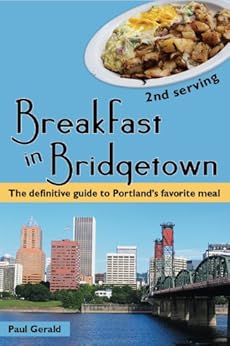
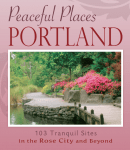
I reviewed the first edition of Paul Gerald's breakfast book in October of 2008. This "2nd serving" edition has been out since 2011 and I should have run out and bought it immediately but I have this tendency to procrastinate. Then Gerald sent me his newer book, Peaceful Places, Portland, so I had to read that first.
I loved it so much that I'm feeling inspired to write a series of posts where I go to the book's peaceful places which I haven't been to before, and let the book help me discover them. Because when you've lived in a city and loved it for 20 years, there's something magical about finding a person who can show you something new. Paul Gerald, with his collection of Pacific Northwest hiking, camping, and breakfasting books, has proven himself to be that person. So, that'll be a blog post or two at some point this summer, I hope.

And in the meantime, even though the 2011 Breakfast in Bridgetown is now slightly out of date (Gerald posts updates on his website), it's so fascinating (the Hollywood Burger Bar used to be a trolley stop?!) and funny that I can't put it down. Not even to get myself dressed so I can go get breakfast at one of those places I've been meaning to try.

Incidentally, yesterday marked the 5th anniversary of Worducopia. I went back and read some of my old posts to reminisce a little bit, and decided that I should really write some more of those book review-type posts one of these days.

Thursday, April 4, 2013

What Would Jane Austen Do?

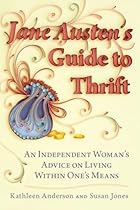
Today I'm interviewing Kathleen Anderson and Susan Jones, authors of Jane Austen’s Guide to Thrift: An Independent Woman’s Advice on Living Within One’s Means.

Jane Austen's Guide to Thrift is a fun way to bring a little Austen magic into your modern-day life. Using examples from each of Austen's books, the authors give advice on everything from "Household Economy the Charlotte Lucas Way" to "Austen's Rules for Refusing, Accepting, and Giving Gifts." The advice would be useful to anyone setting out on their own for the first time, but I, of course, wanted to start with the really important things in life: what to read.


Q: For readers who are new to Jane Austen and perhaps new to classic literature, which of her novels would you recommend they start with, and why?

For readers new to Jane Austen, start with Pride and Prejudice! Austen pulls out all the stops with a bright, amusing heroine, Elizabeth Bennet, matching wits with a wide variety of frenemies: the boring yet annoying cousin who’s looking for a bride, any bride; the wicked womanizer who tries to charm practically every female he meets, in addition to the aristocratic snob who looks down on Elizabeth and her family, and yet can’t resist the love he feels for her. Elizabeth’s social networks bring her together with these Regency gentlemen again and again, sparring verbally on the dance floor, jousting with words in the shrubbery, and conversing with energy in the drawing room. In a world menaced by duplicitous suitors and shameless sycophants, Elizabeth Bennet proves a feisty advocate for virtue and courage, and she brings out the potential heroine in all of us readers.

Q: What modern-day book (or books) would you recommend to readers who have enjoyed Austen's novels?

Susan: I love the Pink Carnation series by Lauren Willig, set in Regency England and focused on espionage in the Napoleonic Wars. My special favorite is The Mischief of the Mistletoe, a book in which Jane Austen features as a character. I love the characters and the plot, and most of all, it frequently made me laugh out loud.

Kathleen: I love Jane Austen best, and will accept no substitutes, except possibly my own.


Q: Which of the pieces of advice in your book do you find hardest to follow?

Susan: The pieces of advice that I personally have trouble with relate to getting regular exercise. If reading took care of getting me into shape, I’d be all set. However, in spite of my good intentions, I frequently find myself turning those pages rather than making my daily walk, breathing fresh air and building my body chemistry.

Kathleen: When planning a vacation, I have a hard time spending money on hotels. I always instinctively ask myself, “Is there a friend or relative who would welcome a visit?”

Q: Last year, Amy Smith wrote about her traveling Jane Austen book club across Latin America, in All Roads Lead to Austen. Do you agree with Smith that Austen's work has universal appeal, across cultures and socio-economic statuses? 

In 2010, Vice Premier Wang Qishan of China revealed that he enjoyed reading Austen’s work for pleasure, and Sense and Sensibility was his favorite of all, with its precarious struggle for equilibrium between sensibility/passion and sense/reason. If that doesn’t prove a universal appeal, I’m not sure what would. Austen appeals across age divides, cultural differences, socio-economic groups, and genders because her works deal with basic issues: loyalty, love, honor, courage, and virtue among them. These are qualities that most of us admire and struggle to emulate in our lives, whoever and wherever we may be.

Thanks, Susan and Kathleen, for sharing your insight  Austen, both in your book and in this interview.


Dr. Kathleen Anderson has published numerous essays in academic and arts journals, such as Persuasions: The Jane Austen Journal. She earned her B.A. from Harvard University and her M.A. and Ph.D. in English from the University of Iowa. Anderson has taught at the college level for over twenty years, and specializes in nineteenth-century British literature and Women Writers. She is currently a Professor of English at Palm Beach Atlantic University in Florida.

Dr. Susan Jones has published essays in academic journal and books on subjects ranging from Jane Austen;to the role of women. Her work has appeared in Persuasions: The Jane Austen Journal and her creative work has appeared in Quilt magazine and in The Santa Fe Review. Jones has taught at both the secondary and college level for over twenty-five years; she specializes in the areas of Medieval and Renaissance British literature, but has always had an interest in Jane Austen. She is a Professor of English at Palm Beach Atlantic University.

Wednesday, April 3, 2013

Wedding Dogs (Book Review)

We all know people who treat their dogs like members of the family. Then there are the human family members who aren't exactly on their best behavior at weddings. So, why not get your dog a fancy outfit and invite him or her to your wedding (or at least the reception)?

Wedding Dogs, by Katie Preston Toepfer and Sam Stall, will give you several reasons "Why not," as newlyweds describe their canine loved ones whining through the service, stealing the flowers, and generally being stressed by the crowd.

But it also offers adorable photos and stories as proof that some dogs, sometimes, can be delightful additions to the party.

Here's how it's done. Awwwww!

Wedding Dogs is beautifully made. Every entry has high-quality photos of the dog/s in all their finery, and the accompanying text describes the wedding and how the dog/s participated--successfully, or . . . interestingly. Some funny stories, and some touching ones. I would have liked a little more back story on each of the dogs and couples. Surely every couple has a story of what about their dog is so special that it was worth the effort to have him/her at the wedding, right? I wanted that story. I am a sucker for the "awwwww" pet moments and I wanted more. I wanted people who aren't necessarily "dog people" to be able to read this book and understand why Wedding Dogs is a thing. That's not what this book is, but it is a lovely celebration of canine companionship. 


The Soundtrack: I Love My Dog, by Cat Stevens.  ("I love my dog as much as I love you. Though you may fade, my dog will always come through.")  I always thought the words to this song were a little odd.

Then again, I didn't have a dog in my wedding party.

Wedding Dogs was sent to Worducopia by Quirk Books. The opinions expressed in this post are solely my own and have not been approved or influenced by the authors or publishers.

Sunday, March 24, 2013

Sunday Salon at last!

I've been wanting to get back to Sunday Salon posts for months, but my Sundays have been busy, the format has changed a bit since I was last involved and it's taken me a while to get into the swing of things. I hope to become a regular again.


And the kitties wonder: Why is this thing?
What I'm doing today: Last week my younger son and I built the bookcase that our family bought at Ikea in . .  2010? It's been gathering dust in its box in the garage all this time, It was actually very quick to put together, if you don't count the 3 years languishing in a sea of procrastination. I have a couple of pictures of the process on my Instagram page. Today I hope to post a photo of the shelves full of books and the little nook that's beginning to take shape in our living room. Another goal today, but not as photo-worthy, is to get the tax info ready to send off.

Also having tea with a friend this afternoon and it's gorgeous outside today so maybe I'll get out and take some pictures! Me and photography is not a friendship I ever would have predicted. We bought Evan a good digital camera for his 11th birthday and it's transformed me. (Luckily he is happy to share). I was always the girl who either forgot the camera or walked around (Through Europe! And my honeymoon!) with it tucked safely away in the backpack. Now I'm the one who drags people along on photo walks. Many of my photos aren't very good.
OK, most of them.
(...are terrible).
But, if I take enough of them, I generally come up with a few that make me happy. These days I seem to be blogging more photos than book reviews. Crazy!

What I'm reading: In the early stages of research for a novel I'm contemplating, I brought several books home from the library yesterday and couldn't help diving into Transitions of the Heart: Stories of Love, Struggle, and Acceptance by Mothers of Transgender and Gender Variant Children," edited by Rachel Pepper. Oh, my gosh. The no-matter-what love that shines through each of these mother's stories is palpable, like a weighted bookmark, holding down every page. A powerful message for every parent. No--for every human being.

What I'm writing: Finishing up edits on novel #2 before submitting it. My writing group is amazing. After reading a chapter every two weeks, they're four chapters from the end and I'm really excited about the changes they're requesting in this version of the ending. (They never read the first ending--I had already scrapped it and started over before they got that far. Thank goodness! It was terrible.)

I also wrote one chapter of the novel that's going to be my next project. Evan read it and said it was good--a little weird, but a good start for a book. It's not intended for 12 year olds, so I guess I'll take "good but a little weird" as a compliment?

The Sunday Salon is on Facebook at Sunday Salon.


Tuesday, March 5, 2013

Peaceful in Portland

Today I'm reading Peaceful Portland, by Paul Gerald. I absolutely love this book. It's full of ideas for local outings--some well-known, some hidden away. If you live in or visit Portland, I highly recommend having a copy on hand.

I found my own peaceful reading spot, next to the fireplace . . .  and then spent 45 minutes trying to figure out how to post my Instagram photos on my blog, which was not at all peaceful. 

I finally gave up and just posted the raw photos here. To see the fancy versions, go to my Instagram page.


Estellagram Challenge prompt: Nonfiction

The teaser in the photo below is from Peaceful Portland's description of a hike on Mt. Hood. In case you can't read it in my photo, the text version is below.

Book Soulmates Challenge prompt: Teaser Tuesday
"Whenever I go to Eagle Creek, I expect to see fairies. It's really that magical: waterfalls plunging from all around into a lush, green canyon; a mountain stream rolling along at the base of vertical cliffs; a trail that seems suspended in midair."

Now, if that doesn't want to make you visit the Portland area, I'll bet it at least makes you want to read the book!

Teaser Tuesdays is a weekly bookish meme, hosted by MizB of Should Be Reading. 


Saturday, February 16, 2013

Snapshot: Old Lumber Mill

Here are a couple of shots from my birthday last September. We went on a bike ride that day, which ended up at an old abandoned lumber mill in the small town of Vernonia, Oregon. Can you see the tree inside, through the doorway?


We had a blast investigating this historic site, which has obviously been renovated by fairies in the intervening years since it was closed in 1957. Graffiti-artist fairies.


I happen to think that graffiti is beautiful, when done right. And, in this case, the fairies did not disappoint.


I've been intrigued about this spot and its history ever since our visit to this site. For a mere $45 I can order a used copy of this book that details the history of the mill. Or, I could get it from my library for free.

Life is full of difficult decisions (she said, as she donned her shoes to head to the library).

Saturday Snapshot is hosted by At Home With Books. To participate, post a picture that was taken by you, a friend, or a family member, and add your link. 

Wednesday, November 10, 2010

Green Books Campaign: Food Security for the Faint of Heart


This review is part of the Green Books campaign. Today 200 bloggers take a stand to support books printed in an eco-friendly manner by simultaneously publishing reviews of 200 books printed on recycled or FSC-certified paper. By turning a spotlight on books printed using eco- friendly paper, we hope to raise the awareness of book buyers and encourage everyone to take the environment into consideration when purchasing books.

The campaign is organized for the second time by Eco-Libris, a green company working to make reading more sustainable. We invite you to join the discussion on "green" books and support books printed in an eco-friendly manner! A full list of participating blogs and links to their reviews is available on Eco-Libris website.


If you were stranded on a deserted island and could have one book along with you, what would you pick? I always thought it was a toss-up between the complete collection of Calvin and Hobbes, the complete works of Shakespeare, and a blank book I could write in.

But maybe I should pick Food Security for the Faint of Heart--a book that might help me survive long enough to return to the stacks of books I left teetering on my bedside table. Between the advice about using plants as medicine, growing, finding, and storing food, and collecting safe water to drink, this book is a great resource packed into a portable 175-page paperback.

But what if a person doesn't expect to be stranded on an island anytime soon, you ask. What if they're not interested in stockpiling food for the apocalypse?

Most of us have had the electricity go out, or the water shut off, for longer than we'd like, and Robin Wheeler has tips for those situations, too. Knowing how to preserve food safely can be a real money-saver if the fridge or freezer stop working. And her tips on edible landscaping are inspiring (I've all but given up on growing a garden, but maybe I could manage not to kill native plants that provide berries or edible flowers?), reflecting her expertise as owner of a permaculture nursery in Canada.

Even if you don't live in an area where winter storms, earthquakes or hurricanes are likely events, FEMA lists any number of other disasters citizens should be prepared for, from flood to wildfire or worse. Really, a book like this is just one step beyond preparing the emergency supply kit we should all have at the ready. I'd stick it in my own (half-ready) kit, but I'm hoping to use the instructions for making homemade bouillon sometime before the next disaster strikes, so onto the cookbook shelf it goes.

All this and an eco-friendly format, too! This book was printed on 100% post-consumer recycled paper using vegetable-based ink and an FSC-approved cover

By Alison Jakel

Friday, October 15, 2010

Getting organized

Fall has always had more of a "New Year" feel to me than January. The combination of my birthday in September, that back-to-school mentality, and something about the crisp fall air never fails to bring back that desire to start fresh.

This fall I vowed to get organized, and stay that way. To that end, I went to the library and brought home a stack of organization books to add to the teetering piles of books I don't have time to read.

Hmmm, what's wrong with that picture?

At the top of the pile was The Messies Manual, written by Sandra Felton of Messies Anonymous. I'll tell you, this book made me feel like I had it all together! My life and house may feel disorganized to me, but boy could it ever be worse.

That's not to say that Felton didn't have suggestions that were useful to me. The main thing I took away from this book was the understanding that procrastination is not the same as laziness. It is simply a habit, and habits can be broken.

So, I need to break the procrastination habit and replace it with new, healthier habits such as hanging up my sweater instead of laying it on the back of the couch, keeping my keys in my purse or on the hook by the door, and putting the toilet paper on its holder instead of setting it on the back of the toilet to deal with "later." Got it. But before getting started, I thought I'd probably better read a few more of these books I'd piled up. (What? What's funny?)

So, I turned to Hannah's Art of Home. The fact that Hannah Keeley is a homeschooling mom appealed to me right away, and I loved her concept of different styles of cleaning to match different personalities. The first part of the book is a personality quiz. I love personality quizzes! I not only took the quiz, but also gave it to my husband, my two children, and the cats.

The cats refused to participate and my ten-year-old gave up on question 8:
If I were an outfit, I would be

a. a tailored jacket with clean-cut pants
b. snazzy overalls with a banana yellow t-shirt
c. an oxford shirt and khakis
d. soft blouse and bohemian skirt
If there had been an (e) oversized skateboard logo t-shirt and ripped jeans, he might have stuck with it for a few more questions.

For the record, personality quizzes intended for mothers do not produce valid results when given to 13-year-old boys. Basically, a 13-year-old boy would make a really wacky mommy. (This could be the basis for a great novel!) My own quiz was more accurate, and Hannah's take on how my personality would impact my efforts to organize my home was entertaining. I enjoyed it so much, in fact, that I felt another book was just what I needed.

Some of what I'd read in the previous books had led me to realize that even though I've never thought of myself as ADD (Attention Deficit Disorder), I have certain, shall we say, ADD-friendly tendencies. Like, getting out food to fix dinner at 5:30 but then remembering that I'd planned to pay the bills before dinner so I start to write a check which reminds me that I need to order new checks so I get on the website to order checks and I'm in the middle of choosing which checks to order (and checking Facebook and looking for a recipe for pasta with chicken and no tomatoes because we're out of tomatoes) when my husband rides up on his bike which means it's 6:45. Doesn't this happen to everyone?

So, ADD-Friendly Ways to Organize Your Life seemed like a good book for me. I started reading it, and it really is helpful. The only problem is that when my friend and I were at the sauna talking about this whole organizational thing and whether there's such a thing as adult-onset ADD, we got distracted and started talking about food. My friend offered to lend me her copy of Nina Planck's Real Food: What to Eat and Why, and so I started reading that and it's fascinating (more on this another day). Alas, now ADD-Friendly Ways to Organize Your Life is due back at the library, so I'm going to return it. Just as soon as I find my son's copy of The Zombie Survival Guide, which was due last week. And then? Why, then I'll get organized, of course!

by Alison Jakel
Sunday, July 4, 2010

Look Great, Live Green (Deborah Burnes)--book review

I'm a little leery of the term "all-natural." What does it really mean? I mean, Botox is made from nature's own botulinum poison; chocolate chip cookies are man-made. I wouldn't take a bath in either of those, but I know which one I'd take to a potluck.

But I checked out Look Great, Live Green from the library because I figured if I'm going to be selling skin-care products, I should be prepared to answer questions from the die-hard natural skin care contingent (which includes quite a few of my friends). No single product is right for everyone, and if people have specific concerns about ingredients, I want to be able to address them, accurately and honestly.

There's a lot of useful information in here. Did you know many natural care companies have been bought out in the past decade? Burt's Bees (Clorox), Tom's of Maine (Colgate-Palmolive), Aveda (Estee Lauder), and The Body Shop (L'Oreal) are all now lines of larger companies. Also, Burnes gives clear information about the benefits of different types of products--the different types of masks, for example, or why toner is important--and how those benefits can be achieved most naturally. The "skin care makeover" section in the back of the book was also interesting, even though the author mostly replaced a variety of brands with one brand: hers.

That's right, Look Great, Live Green was written by a woman with her own line of all-natural skin care products. Hardly the objective source I was looking for. (This is not to say that it's three hundred pages of advertising--in fact quite a few other companies are included in her lists of recommended products.)

The author's bias is clear, though. She advises steering clear of certain ingredients even though the research is inconclusive or not specifically relevant to skin care; in fact, some of them are specifically recommended by dermatologists. For every type of cosmetic, she lists the ingredients of a particular product that illustrates things to avoid--but doesn't indicate the reasons. As you might expect, many ingredients appear in both the Ingredients to Avoid and Ingredients to Look For products. In fact, a person skimming the lists could come to the conclusion that water is to be avoided at all costs--after all, it's listed in nearly every product Burnes avoids!

In short, I finished the book feeling somewhat more conflicted, but no less confused than I'd started out.

Wednesday, March 31, 2010

Savor, Mindful Eating, Mindful Life--Thich Nhat Hanh and Lillian Cheung

So, a Buddhist monk and a nutritionist decide to write a book together. . .

Doesn't that sound like the first line of a great joke? Unfortunately, (a) It's not (b) I can't come up with the punch line if it was, and (c) I'm supposed to be writing a review of the book they wrote, rather than creating punch lines for nonexistent jokes.

But if it were a joke, the Buddhist monk would lead the reader in mindfulness, with the reader dutifully slowing down while drinking, say, her nice tall glass of lemonade. She'd focus on the cool trickle of liquid down her throat, savoring the contrasting tartness and sweetness. Inside the flavor, she'd taste the fluffy white clouds that made the rain that produced the lemonade, and the earth in which the lemon tree grew, and the farmer who picked the lemon . . .

And the nutritionist would say, "Lemonade? Really? Because you know, there's an awful lot of sugar in that. Consumption of fruit juice contributes to diabetes, and, by the way, you could stand to lose a few pounds. You really shouldn't be drinking juice this late in the day at all. And what's that you were planning to savor with that lemonade--a sugar cookie?!"

And the Buddhist monk would say . . . [Insert punch line here]

But seriously, folks. There's a lot to be said for merging good nutrition with putting thought into what and how we eat. I'm just not sure the two perspectives were in harmony, in this case.

There is a lot to love about this book as an introduction to the Buddhist perspective, though. The breathing meditations for everything from reading email, to watching T.V., for example:
Breathing in, the remote control is in my hand
Breathing out, why am I watching television?
That cracks me up, but it's certainly a worthwhile question, and an honest answer could lead to some much-needed soul searching. My favorite is the traffic jam meditation:
Breathing in, I follow my in-breath
Breathing out, I follow my out-breath
Breathing in, I know everyone is trying to get somewhere
Breathing out, I wish everyone a peaceful, safe journey
Breathing in, I go back to the island of calm within myself
Breathing out, I feel refreshed.
I actually love this idea, and I'm going to try it next time I'm stuck in traffic. Unless my kids are in the car. I wouldn't want them to worry.

by Alison Jakel

Savor is on tour for the TLC Book Tours. The opinions expressed on Worducopia are my own and have not been approved or influenced by TLC Book Tours, the publisher, or the authors.

Sunday, December 6, 2009

The Sunday Salon

The Sunday Salon.com It's a cold, cold Sunday in Oregon--which means it's actually dipping below freezing like a real winter day. The perfect day to either cuddle up with a cat and a book, or to bake cookies. Or to flip through cookbooks and recipe cards, contemplating which cookies to bake until it's time to fix dinner.

I started reading Timothy Egan's The Big Burn: Teddy Roosevelt and the Fire the Saved America while waiting to pick up my son yesterday, only to realize--just as Teddy Roosevelt was winning his wrestling match against Gifford Pinchot in Roosevelt's Governor's mansion--that it was due at the library that very day. I returned it last night, and with 143 holds on 24 copies, I'm not likely to get to the three-million-acre forest fire anytime soon. At least I read enough to know that next time my hold comes in, I should put it at the top of the stack.

Okay, now on to the cookies! Except I don't have butter. I need a recipe that calls for no more than 1/2 cup of butter, will make a large batch, and be ready within an hour. Any suggestions? ;-)

Thursday, November 12, 2009

Your Family Constitution--Scott Gale (book review)

As a one-time counselor and parent educator, I'm well-versed in the mantras of effective parenting: 1) have clear expectations and 2) be consistent.

Scott Gale has your back in the Clear Expectations arena. Your Family Constitution: A Modern Approach to Family Values and Household Structure outlines a plan for writing up a document for each family member to agree to, stating expectations and consequences. More importantly, it takes parents through a step-by-step process for determining what these expectations might be: what are our longterm goals for our children, and how can we help them develop the traits and habits we value most highly?

Gale, who doesn't have a background in counseling or family dynamics, also shares the parenting struggles which led him to devise a "constitution" for his own family. While his methods aren't groundbreaking, they are sound, and provide ideas parents can use to make "Have Clear Expectations" into something tangible. Gale advocates for as much child-involvement in the process as possible along the way.

I'll be interviewing author Scott Gale at the end of next week, so if you have questions for him about the book, I welcome them! I'm looking forward to learning more about how he incorporated rewards into the program (he alludes to using family activities as rewards, but I didn't find them written into the actual contract) and how the constitution has evolved since the book was written--since, as any parent can tell you, as soon as we get those kiddos figured out, they change.

Your Family Constitution was provided for review by Pump Up Your Book.

Tuesday, November 10, 2009

Green Books Campaign: Ecoholic


This review is part of the Green Books campaign. Today 100 bloggers are reviewing 100 great books printed in an environmentally friendly way. Our goal is to encourage publishers to get greener and readers to take the environment into consideration when purchasing books. This campaign is organized by Eco-Libris, a company working to green up the book industry by promoting the adoption of green practices, balancing out books by planting trees, and supporting green books. A full list of participating blogs and links to their reviews is available on Eco-Libris website. The above logo was created by Susan Newman.

Be careful what you wish for.

In recent years I've yearned for one place that would inform me about which products were good, bad or indifferent for the environment and my body. Not just a list of toxic ingredients to scan for on every bottle of sunscreen or shampoo--a list of safe products to make or buy. I know that certain cleansers are extremely toxic, but if a product says Clorox and "green" on the same label, is it truly green? And what about water bottles? The disposable ones are out, for so many reasons, but what to use instead?

Adria Vasil's Ecoholic has all this and more, in 370 readable pages. So readable that I started out reading it cover to cover, until I realized this method would kill me.

It's so comprehensive that unless you're a die-hard environmentalist of the no-deodorant-or-packaged-toothpaste variety, you run the risk of realizing that you're doing more things wrong than right. Between your polyurethane-filled mattress, the formaldehyde in your sheets and pillow, and the toxins you've slathered onto your body in the interest of being clean, you should maybe avoid breathing at night, just in case. And yet, last I checked, breathing is still necessary for survival.

This is where baby steps come in. Because, there are solutions to most of these issues, but a person can't tackle them all at once. I can't run out and buy a new mattress right now, but when I do, I'll be glad to have Ecoholic at hand to help me through the process. And in the meantime, I can start looking through my medicine cabinet and under my kitchen sink, and at least switch to an aluminum-free deodorant, right? Ecoholic also provides the motivation for paying that little bit more for biodegradable detergents and so on.

I highly recommend buying Ecoholic as a first step towards better health for yourself and the earth. It's one purchase you won't feel guilty about! It was printed using eco-friendly ink using a low-emissions process, on 100% recycled paper; this saved 212 trees in its first printing as well as over 13 thousand pounds of solid waste, 127 thousand gallons of water, and thirty thousand cubic feet of natural gas.

Tuesday, August 4, 2009

ADHD & Me--Blake Taylor (book review)

It was the subtitle that got me: What I Learned From Lighting Fires at the Dinner Table. That, and the fact that Blake Taylor was 17 years old when he wrote this memoir/guide to living with Attention Deficit Disorder with hyperactivity.

Having navigated through expulsion from preschool, a disastrous move in 6th grade, and the San Francisco Bay in a sail boat, Taylor offers advice on handling the obstacles many people with ADHD face (and, as an added bonus, why sailing into the San Francisco Bay without permission is a bad idea.)

Taylor organizes ADHD & Me by typical traits, with chapter headings like Being Bullied and Being Disobedient. Each chapter has three parts: a personal anecdote, a description of the cause and effect of the trait, and suggestion solutions. The anecdotes are sometimes funny, sometimes sad, and always well-written and insightful.

This would be a great book for parents and teachers dealing with ADHD, or for middle- or high school teens who tend to be disorganized or not to fit in with their peers. Taylor is young enough to be a peer to these kids, and successful enough (now in college at Berkeley) to be an inspiration.

The Soundtrack: Footloose, by Kenny Loggins.
You're playing so cool
Obeying every rule
Dig way down in your heart
You're burning, yearning for some
Somebody to tell you
That life ain't passing you by

Publication Info: 2007, New Harbinger Publications, 176 pages.

Monday, July 27, 2009

15 Reasons to Smile When Gas Prices Go Up (and up, and up)

It won't happen right away, according to Christopher Steiner, author of $20 Per Gallon--

which, have I mentioned, you can win?

--in fact, things will get a lot worse for most of us before they get better. But when the prices at the pump continue to skyrocket (and Steiner makes a strong case for the fact that they will), Steiner's book maintains that we can look forward to a future with:

1. Less traffic, especially at rush hour
2. Less smog and pollution.
3. A fitter, healthier population
4. Kids living close enough to walk or bike to school again
5. The demise of big box stores like Wal-Mart, and therefore
6. The return of the small-town Main Street
7. More telecommuting
8. Improved inner city transportation systems
9. High speed trains connecting major cities
10. Greater demand for and availability of locally grown and made food
11. Fewer products made in China and shipped overseas, and therefore,
12. More products made locally
13. Further innovation in alternative vehicles
14. The survival of species such as Bluefin tuna, which are currently being overfished to extinction
15. Increasingly greener energy sources

As he follows the rise of oil prices from the current $3-4 per gallon of gasoline, up through $6, $8, and so on up to $20 per gallon, Steiner gives the history of our dependence on petroleum in different arenas, and the effects rising costs will have on our day-to-day lives. To keep things lively, he also brings readers into the heart of America as he visits an airplane graveyard, makes deliveries throughout Manhattan in an electric UPS truck ("all in all, it amounts to a powerful golf cart with a ton of cargo space,"), and goes carp fishing with a professional fisherman.

Steiner acts like he can see the future. Yes, he backs up every assertion with facts and figures, but some of his predictions may turn out differently than he expects, and I'm sure there are other visions of the future. Still, this book adds a fascinating perspective to North America's current lifestyle. In the scheme of things, our dependence on petroleum products is a tiny blip on the radar of humankind--a blip that we're destined to leave behind at some point. We might as well suck it up and prepare ourselves for change.

The Soundtrack: Tower of Power's Only So Much Oil in the Ground.

Would you like a copy of this book? Be my (and Hachette Book Group's) guest! The giveaway will be open until Saturday, August 1, when I'll draw two winners.

Tuesday, June 23, 2009

Striving for Greatness

My boys still talk about the hamburger guy, though it's been years since that day.

I don't usually give money to panhandlers, always telling myself that I would, if only there was some guarantee that a dollar handed over would make a life easier, rather than contributing to an addiction. So when the bedraggled young man hovering near the door into Burgerville asked if I had any money so he could buy a hamburger, I paused.

"Do you want a hamburger, or a cheeseburger?"

He hesitated, then looked me in the eye for the first time and spoke with conviction. "A cheeseburger."

My kids and I went inside. The line was long, and by the time we got our food I wondered if he'd moved on, if I'd called him on his bluff. But he was still there, duffel bag at his feet, ignored by every passer-by. He looked startled when I spoke to him. He looked suddenly shy. He looked like somebody's little boy all grown up with no place to go.

"Still want that cheeseburger?" I handed it over, now wishing I'd gotten a bigger size, that I'd ordered a drink to go with it, and French fries. I accepted his thanks and went back to my boys, who had thirty-six questions about the man and who he was and why he was there and why I bought him a cheeseburger and whether I'd done things like that before.

In the book Something Beyond Greatness, Judy Rodgers and Gayatri Naraine examine stories of people who've gone beyond the realm of the simple good deed; people who have risked their life to save somebody, or significantly altered their own life to make a difference in the world.
In these beautiful stories, we began to make out the contours of an emerging pattern. It had three elements: 1) seeing with love, 2) acting with the heart, and 3) the mystery of destiny—right place, right time.
There are plenty of stories and lots of information in this 122-paged volume, but the section that really stuck with me was the research of psychologist Jonathon Haidt, who studies moral emotions. Haidt describes the feeling people get when they witness someone giving help to another in need:
Elevation is a warm, uplifting feeling that people experience when they see unexpected acts of human goodness, kindness, and compassion. It makes a person want to help others and to become a better person himself or herself.
No, a middle class mother of two who buys a 99 cent burger for a stranger is hardly representing Greatness, much less Something Beyond it. It's not even the nicest thing I've ever done. So why did the book bring it to mind?

Maybe because I experienced the same three elements, though on a smaller scale, that Rodgers and Naraine found in the acts of greatness that they studied. Or because the fact that my kids still think about it is evidence of its impact on their psyches. Whatever the reason, Something Beyond Greatness inspired me to open my eyes wider as I trundle through life, not to wait for the "right place, right time" to present itself, but to seek out opportunities to see with love and act with my heart.

What's the nicest thing you've ever done for someone?

The Soundtrack: Brother, Can You Spare a Dime?

For more information about this book, please see the other sites on the TLC Book Tour.

Thursday, April 23, 2009

On Aging Gracefully (plus a giveaway!)

I've never been one to spend a lot of time on my looks. When I first tried make-up as a teenager I felt like I was pretending to be someone I wasn't. (This was in the days of blue eyeshadow...) And I didn't want to waste time trying to make it look right. I just wanted to get up and do the basic shower and deodorant, run a brush through my hair and be on my way. A good haircut, to my mind, is one that looks halfway decent without requiring styling. When my big sister put highlights in her hair I scoffed, "I'll never dye my hair."

Lesson learned: never say never. Also, never scoff at your big sister. She doesn't forget a thing.

Undeniably in my forties now, I've truly never felt better, but my perspective on certain things has changed. I still don't style my hair, but could I maybe stop it from thinning so much? Still don't want to wear make-up, but I now accept the need to moisturize. And if I'm going to moisturize every morning, might it be a good idea to find a product that also evens my skin tone? And, what the heck is my skin tone, anyway? I stopped reading those articles in Teen magazine when I was 15.

And also, fashion. Help! When I was younger I knew what was in, and I either wore it or didn't. Now I know what's in, but if I wear that I'll look ridiculous. How are forty year old women supposed to dress these days? Not like my mom did at forty, that's for sure. (Now a lovely seventy-something, Mom wouldn't be caught dead in those clothes either.) When I shop, I see skinny teen clothes and old-lady-on-a-cruise-ship clothes. I don't see a clothing section that reflects who I am.

Here are two books that offer different perspectives on aging beautifully without resorting to drastic measures like plastic surgery.
Bobbi Brown's Living Beauty adds quotes from and lots of pictures of real-looking women in their forties and up. There's also a chapter on dealing with menopause, and another on late-life pregnancy (not to be an issue chez Worducopia, I trust). The sections on eating right and clothing choices are brief, while more of the 204 pages are allotted to those fun "before and after" makeover pictures and problem-solving tips for things like darkness under the eyes, uneven skin tone, and droopy eyelids.

Charla Krupp's How Not to Look Old deals with similar issues but with a no-nonsense "You don't want to wear that, darling," tone that readers will either find refreshingly honest or mildly judgmental, depending on their own perspective. Krupp has been Beauty Editor for Glamour magazine, and offers specific advice: lists of clothes that look dated and "forbidden fashion items for every woman past the age of thirty;" products for everything from skin care to tooth whiteners; and three levels of interventions for various beauty issues. Both of these books prominently feature women of different shades and ethnic backgrounds but How Not to Look Old gives more specific advice for women of color.

So, what kind of time do you spend on your beauty routine, and has that changed as you've gotten older? Do you care about looking chic or hip? Does your mom/aunt/grandma/daughter?

All comments about this topic (hint: Do you want a free book isn't the topic) will be entered to win one of these books! (if you're interested in one and not the other, let me know). Hachette Book Group is offering three copies of each, to readers --or their moms, wives or grandmas!--with U.S. or Canadian mailing addresses (sorry, no P.O. boxes, please). Winners will be chosen by random drawing on May 4th.

Monday, April 20, 2009

Alpine America--Don Mellor and Olaf Soot (book review)

Coffee table books are so much fun to look through, but often they have a lot of pretty pictures without a lot of substance. Alpine Americas definitely has its share of pretty pictures--photographer Olaf Soot captures enough gorgeous vistas throughout the book to make a dozen calendars. But the essays that make up the balance of the book offer perspective on the widely varied cultures and regions that are connected on a deep, geological level.

The mountain range spans the length of the globe, from the Arctic, down through North and South America, to Antarctica. Mellor and Soot start with Arctic peaks and skies, and an article about the phenomenon of mountain climbing as a hobby. Moving further south, these upper elevations become populated, and both photos and essays move into the realm of local culture and how it interacts with environment.

Olaf Soot is a multi-faceted fellow. As well as being a photographer, he's the engineer behind one of the Cirque du Soleil shows and several theme park attractions. Don Mellor is a mountain climbing guide, chiefly in the Adirondacks, and has written practical climbing guides in addition to another collaboration with Soot, Adirondacks Alive.

For more information about Alpine Americas check out your local bookstore or the book's website.

Thursday, February 26, 2009

Rich Like Them--Ryan D'Agostino (Book review and giveaway)

What it isn't:
  • A self-help book
  • A "secret" formula for you to follow to get rich quick
  • A financial planning book
What it is:
  • A book of stories about people who happen to be very well off
  • Full of words to live by, whether you care about money or not
  • Inspiring
What I'll remember:
  • Harvey Jason, a rare book-seller: He talked about gratitude and the role it played in his success. He saw his own good fortune as a by-product of his relationships, both professional and personal, with other people. Nurture those, he said, and good things will come.
  • By the time I completed my journey, it had been drilled into my head that if extreme wealth is your only goal, you will probably never become extremely wealthy. Milking a job you love for all it's worth, however--now you're getting somewhere.
How to get your copy:
  • Leave a comment telling about a person whose life philosophy or success (doesn't have to be financial success) you admire. Preferably a real person who you actually know (I mean, any of us could say Ghandi, or Jesus, or Siddhārtha Gautama, but once somebody says that, how do you follow it with your great-uncle Bruce?).
  • Entries accepted until March 8th.
  • Hachette will deliver books to street addresses in the U.S. and Canada only.
  • Make sure to include your email address or an easy way to contact you!

Monday, January 12, 2009

A Journey Into Steinbeck's California—Susan Shillinglaw (book review)

Author Susan Shillinglaw is resident scholar at the National Steinbeck Center in Salinas, California and former director of the Center for Steinbeck Studies at San Jose University. In other words: the woman knows her Steinbeck.

Does this mean A Journey Into Steinbeck's California is dry and scholarly? Well, would you call Steinbeck dry and scholarly? Because much of the book was written by him. Not having read Steinbeck since high school (yeah, I know. Maybe after Dickens?) I wouldn't have imagined he'd have me laughing by page 16, as he describes the social structure of the Salinas he grew up in:

"…then Claus Spreckels came from Holland and built a Sugar Factory (in capitals) and the flatlands of the valley around Salinas were planted to sugar beets and the Sugar People prospered. They were upstarts, of course, but they were solvent. The Cattle People sneered at them, but learned as every aristocracy does that money is the final authority. Sugar People might not have got anyplace socially if lettuce had not become the green gold of the Valley. Now we had a new set of upstarts: the Lettuce People. Sugar People joined Cattle People in looking down their noses. These Lettuce People had Carrot People to look down on and these in turn felt odd about associating with Cauliflower People."

Steinbeck would have gotten a kick out of the Veggie Tales movies.

The book is generous enough with both text and pictures (modern photos by Nancy Burnett mixed with quality historical photos) to satisfy the armchair traveler. The maps and descriptions will help explorers find Steinbeck's childhood home in Salinas, Monterey's real Cannery Row and the sites of the Mexican enclaves that inspired Tortilla Flats, as well as many other sites relevant to Steinbeck's life or of interest to tourists or locals with a casual interest in the author.

This is not a coffee table book. It's 200 soft-bound 7.5" x 7.5" pages, meant to be taken on the road.

A Journey Into Steinbeck's California is the only book I've seen from the ArtPlace series by Roaring Forties Press that also includes A Journey into Michelangelo's Rome, A Journey into Matisse's South of France, A Journey into Ireland's Literary Revival , A Journey into Flaubert's Normandy, A Journey into the Transcendentalists' New England, and A Journey into Dorothy Parker's New York.